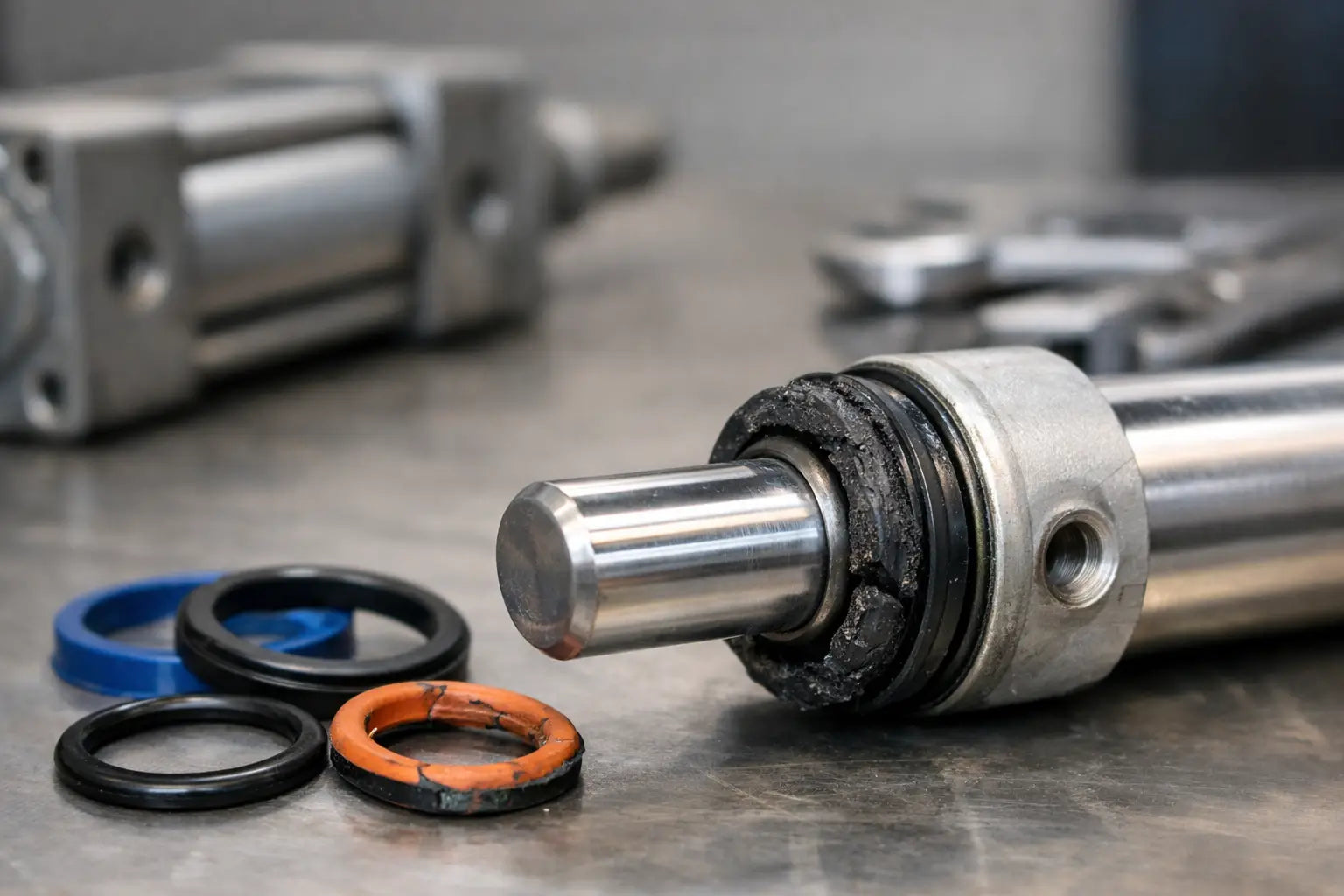
A pneumatic cylinder that will not hold pressure is not always suffering from a piston-seal problem. A worn, cut, or incorrectly sized pneumatic cylinder rod seal can leak air at every stroke, pull contamination into the cylinder, and leave an actuator slow, erratic, or unable to complete its cycle. For maintenance teams, the practical issue is simple: identify the seal profile correctly before ordering, because a close-looking replacement can still fail in service.
Rod seals work at the moving interface between the piston rod and the cylinder head or gland. Their job is to retain compressed air while allowing low-friction rod movement. In dusty production areas, mobile equipment, agricultural applications, and outdoor installations, the rod sealing arrangement must also limit the entry of water, grit, and abrasive particles.
What a Pneumatic Cylinder Rod Seal Does
The rod seal is the primary pressure-retaining seal at the cylinder outlet. During extension and retraction, its sealing lip maintains contact with the rod surface. Depending on the cylinder design, it may be fitted with a separate wiper, guide ring, static O-ring, backup ring, or head seal. Each component has a different function, and replacing only the visibly damaged part can leave the underlying cause untouched.
A rod seal differs from a piston seal in both location and operating conditions. The piston seal separates pressure chambers inside the bore. The rod seal runs on the external rod surface, where it is exposed to side loading, damage from external debris, and poor rod condition. It must balance sealing force against friction. Too little lip contact causes air loss; too much contact can increase breakaway force, cause stick-slip movement, and accelerate wear.
Pneumatic applications generally operate at lower pressure than hydraulic cylinders, but that does not make seal selection casual. Compressed air is difficult to contain because it can escape through very small gaps. Lubricated air, dry air, moisture, cleaning chemicals, high cycle rates, and temperature swings all affect material choice and service life.
Selecting a Pneumatic Cylinder Rod Seal
Correct fitment starts with the cylinder, not the old seal alone. A seal may have swollen, hardened, flattened, or worn enough that its removed dimensions no longer represent the original part. When possible, verify the cylinder manufacturer, model, part number, bore, rod diameter, and head or gland dimensions before selecting a replacement.
Check the critical dimensions
The rod diameter is the first measurement, but it is not enough. You also need the seal groove diameter, groove width, groove depth, and the axial position of the groove. Measure with accurate calipers and inspect the groove for corrosion, burrs, or wear. A few thousandths of an inch can affect installation fit and sealing performance, especially on compact cylinders.
Seal listings may identify dimensions as ID x OD x height or by a profile-specific code. Confirm which dimension order is being used rather than assuming it. If you are matching an equipment-specific kit, compare the OEM number and cylinder location as well. A boom, bucket, steering, outrigger, or clamp cylinder can use different dimensions even within the same machine platform.
Match the seal profile, not just the size
A single-acting cylinder, double-acting cylinder, compact cylinder, and ISO-style pneumatic actuator may use different rod-seal profiles. Common designs include U-cup seals, lip seals, chevron-style packing arrangements, and compact symmetrical profiles. The shape of the sealing lip, heel, energizing feature, and installation direction all matter.
A U-cup profile may provide effective sealing with low friction in a standard air cylinder, while a more supported profile may be necessary where pressure pulses, high speed, or imperfect gland geometry are present. Some seals are directional. Installing a directional seal backward can produce an immediate external leak or allow pressure to bypass the lip.
Do not force a hydraulic rod seal into a pneumatic application simply because the dimensions match. Hydraulic seals are built for higher pressure and different lubrication conditions. They may create unnecessary friction in an air cylinder or respond poorly to dry running. Conversely, a light pneumatic lip seal may not survive a cylinder that sees higher-than-normal pressure, vibration, or contamination.
Select material for the actual service conditions
Nitrile rubber, commonly called NBR, is widely used for general compressed-air applications where mineral-oil mist lubrication is present. Polyurethane can provide excellent abrasion resistance and is often selected for demanding wear conditions. Fluorocarbon materials may suit elevated temperatures or specific chemicals, while PTFE-based solutions can reduce friction in specialized dry-running or high-speed service.
There is no universal best material. NBR may be economical and reliable in clean shop air but can harden under unsuitable heat or chemical exposure. Polyurethane handles abrasion well, yet some compounds are less forgiving in certain temperature ranges. The correct choice depends on pressure, air quality, lubricant type, speed, temperature, duty cycle, and exposure to washdown chemicals or outdoor weather.
Why Pneumatic Rod Seals Fail Early
When a new seal leaks shortly after installation, the seal itself may not be the root cause. The rod surface and cylinder head condition deserve the same attention as the replacement part.
A scored, pitted, rusted, or chrome-damaged rod quickly cuts a new sealing lip. Run a clean fingernail across suspicious marks. If the damage can be felt, it can usually affect the seal. Fine polishing may address minor surface staining, but deep grooves, flaking chrome, or corrosion pits require rod repair or replacement. Installing a premium seal on a damaged rod simply delays the next repair.
Misalignment is another common issue. Worn guide bushings, bearing surfaces, mounting pins, or pivot points allow side load on the rod. The rod seal then carries forces it was not designed to handle, producing uneven lip wear and leakage on one side. In a pneumatic actuator, the symptom may appear as a slow loss of force, air consumption that climbs over time, or an oily dirt ring around the rod exit.
Contamination also causes repeat failures. A rod seal retains pressure, but it is not a substitute for a wiper. If the cylinder works around dust, powder, soil, metal fines, or concrete residue, inspect the wiper at every seal service. A hardened or torn wiper lets abrasive material reach the rod seal and guide components. Moisture in poorly maintained compressed-air systems can contribute to corrosion inside the cylinder and degrade unsuitable elastomers.
Installation damage is avoidable but frequent. Sharp thread edges, keyways, burrs, and damaged rod ends can slice the seal lip during assembly. Use the correct installation sleeve or protective tape where required, lightly lubricate with a medium compatible with the seal material, and avoid twisting the seal in its groove. Never use a screwdriver or sharp pick against the lip.
Inspection Before Ordering a Replacement
A practical inspection saves time and prevents incorrect returns. Start by confirming whether air is escaping at the rod end, through a port, or across the piston. External leakage at the gland points toward the rod seal, wiper, gland seal, rod damage, or alignment. Internal bypass can mimic low-force operation but usually points to the piston sealing arrangement instead.
Record the cylinder make and model, the application, and the dimensions of the removed seal and groove. Note whether the cylinder is lubricated or dry-running, whether it operates indoors or outdoors, and whether the rod has visible damage. For a machine-specific repair, record the equipment model, cylinder position, and OEM number from the parts book or cylinder tag.
For procurement teams and repair shops handling multiple brands, keeping these details with the work order is more useful than keeping only a photo of the old seal. It speeds part-number matching, helps distinguish near-identical profiles, and makes repeat purchasing more accurate. MXPseal's catalog-led approach is built for this type of verification: match the seal by exact dimensions, application, and equipment reference rather than by appearance alone.
Replace Related Parts When the Cylinder Is Open
A rod seal service is often the right time to replace the wiper and inspect guide elements, static seals, and piston seals. The trade-off is parts cost versus labor and downtime. On a lightly used, clean indoor actuator, a targeted repair may be reasonable. On a high-cycle machine or an actuator that takes significant labor to remove, a complete compatible seal kit is usually the more cost-controlled option.
Before returning the cylinder to service, cycle it at low pressure and watch for rod-end leakage, hesitation, and abnormal noise. Then test it at normal operating pressure and confirm it holds position and completes its intended stroke. If leakage continues, stop before the new seal is damaged and inspect the rod, gland, and guide condition again.
The best replacement is not the seal that looks nearest on the bench. It is the pneumatic cylinder rod seal that matches the original profile, measured gland, operating media, and real condition of the cylinder. That extra verification takes minutes and can prevent another unplanned shutdown.