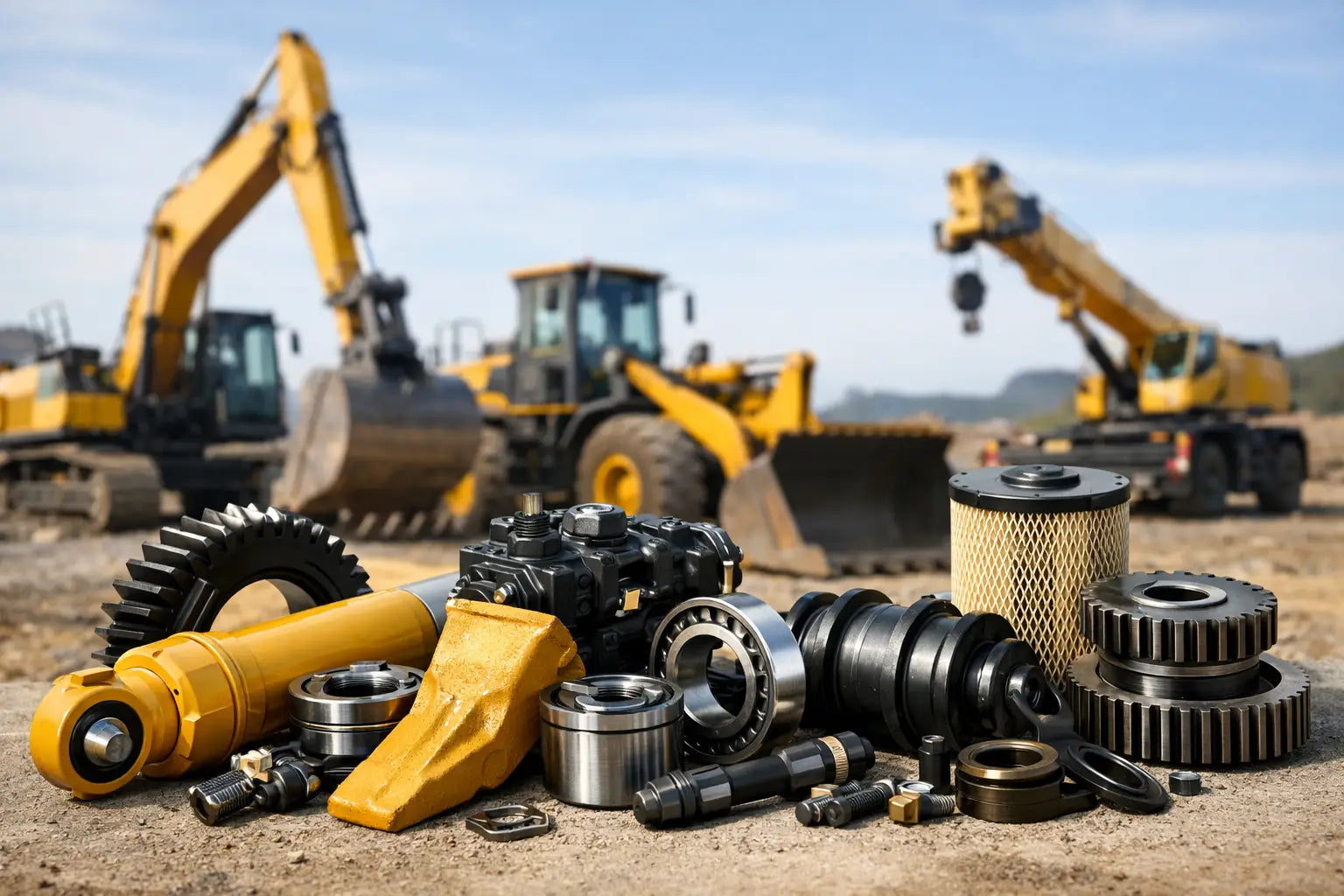
A boom cylinder that starts bypassing internally, a hub seal that leaks, or a loader held up by one worn bearing can turn a planned shift into lost revenue. XCMG spare parts are not simply items to replace when they fail. Correctly identified parts are what return an excavator, wheel loader, crane, or road machine to service without creating a second repair.
For maintenance teams and independent repair shops, the priority is clear: get the right component, verify fitment before installation, and avoid delays caused by returns or repeat strip-downs. That requires more than matching a machine brand. It requires checking the application, part number, dimensions, and the operating conditions of the machine.
What Counts as XCMG Spare Parts?
XCMG equipment uses a broad range of service components across hydraulic systems, driveline assemblies, steering systems, engines, undercarriages, and working attachments. The part needed may be a machine-specific OEM component or a standard industrial item identified by size and specification.
Common replacement requirements include cylinder seal kits for boom, arm, bucket, steering, outrigger, and tilt cylinders; hydraulic rod seals and piston seals; oil seals; O-rings; bearings; bushings; filters; and mechanical wear components. A repair may also require several related items at once. For example, replacing a scored cylinder rod without inspecting the wiper, rod seal, piston seal, and guide ring can leave the cause of contamination or leakage unresolved.
The best purchasing method depends on the part type. An OEM number is usually the fastest route for model-specific kits, electrical components, and cast or machined items. A seal or bearing can often be confirmed by its dimensions and profile when the old part number is unreadable or the machine has been rebuilt previously.
Start With Fitment, Not the Product Photo
Machine model alone is not always enough to identify an XCMG replacement part. Manufacturers can use different cylinder assemblies, seal arrangements, or production revisions within the same model family. A part described as suitable for an XE excavator or ZL wheel loader may still be incorrect if the cylinder location, serial range, or component revision does not match.
Before ordering, confirm the equipment model and serial number where available. Then identify the failed component by its installed location. “Cylinder seal kit” is too broad for a purchasing request. “Bucket cylinder seal kit,” “boom cylinder seal kit,” and “steering cylinder kit” may have completely different dimensions on the same machine.
For hydraulic seals, record the rod diameter, bore diameter, piston dimensions, groove width, and seal cross section. A clear photo of the seal layout and the cylinder nameplate can help, but dimensions remain the final check when no reliable number is available. Measure cleaned parts with a caliper, not a tape measure, and distinguish millimeters from inches before comparing specifications.
For bearings and oil seals, verify inside diameter, outside diameter, width, and any additional identifiers. Oil seals also require the correct lip configuration, material, and installation orientation. A double-lip seal may improve contamination exclusion in a dirty environment, but it can add friction. The right choice depends on the housing, shaft condition, lubricant, pressure, and temperature.
Choosing OEM, Equivalent, or Seal-Kit Options
There is no single correct sourcing route for every repair. The right option depends on the part’s function, the machine’s age, the repair scope, and how quickly the equipment must return to work.
OEM-numbered XCMG parts are often preferred where exact geometry, electronic compatibility, or machine-specific interfaces matter. This is common for certain hydraulic assemblies, valves, sensors, harnesses, body components, and proprietary mechanical parts. The key benefit is direct part-number traceability, provided the number is verified against the machine and component.
Equivalent industrial seals, bearings, and standard oil seals can be a practical option when dimensions and operating specifications are known. Quality matters here. A low-cost seal that has the wrong compound, poor lip finish, or inaccurate dimensions can fail early and turn a straightforward repair into another cylinder removal.
A complete cylinder seal kit is normally the better value when opening a cylinder for a full overhaul. It replaces the working seal set together and reduces the risk of reusing aged O-rings, backup rings, or wipers. For an emergency repair where one damaged external wiper is the only issue, an individual seal may be appropriate if the rest of the cylinder is confirmed serviceable.
Do not assume a kit is complete just because it is labeled for a machine model. Review the kit contents against the cylinder parts diagram or the components removed during disassembly. Some kits cover piston and rod seals only, while others include wear rings, static seals, and dust wipers.
Hydraulic Cylinder Failures Need More Than New Seals
Seals are frequently blamed for hydraulic leaks, but they are often the first visible sign of another problem. Installing a new XCMG seal kit into a damaged cylinder can produce a short-term fix and a quick return of the same failure.
Inspect the rod for pitting, rust, chrome damage, and bending. Check the barrel for scoring and measure the piston and gland for wear. Look at the rod guide and wear bands, especially on cylinders exposed to side loading. On excavator attachment cylinders, loose pins and worn bushings can create movement that overloads the rod seal and wiper.
Hydraulic oil condition also matters. Dirty oil carries abrasive particles across seal lips and spools, while overheating hardens or deforms materials that were selected for normal operating temperatures. If multiple cylinders are leaking or valve performance has become inconsistent, check filters, breathers, oil cleanliness, and cooling performance rather than treating each seal failure as isolated.
The installation process is equally important. Clean the grooves, remove old seal fragments, deburr sharp edges, lubricate components with compatible hydraulic oil, and protect seals as they pass threads or ports. A seal installed backwards, twisted in its groove, or cut during assembly may fail immediately even when the supplied kit is correct.
Control Downtime With Better Parts Planning
Emergency orders cannot be eliminated, but they can be reduced. Fleet operators should track repeat-use components by machine family and hold a practical stock of high-consumption service parts. Seal kits for active excavators and loaders, common oil seals, O-rings, bearings, and filter-related items are often worth keeping on hand when the cost of a stopped machine exceeds the carrying cost of inventory.
A useful internal record includes the machine model, serial number, cylinder location, OEM part number, confirmed dimensions, supplier reference, and installation date. This prevents technicians from repeating identification work at the next repair. It also helps purchasing teams separate a verified fitment from a part that only looks similar in a catalog.
For rental fleets and contractors operating mixed equipment, standardize the information provided with each request. Include the machine model, component name, original part number, measurements where relevant, and photos of labels or removed parts. A complete request improves quotation speed and reduces the chance of ordering a near-match.
MXPseal supports this process with ready-stock sealing products, machine-specific repair kits, oil seals, bearings, and replacement components for heavy equipment. For urgent maintenance work, inventory visibility and exact part identification are more useful than broad claims of compatibility.
Questions to Ask Before You Order
Before approving a purchase, confirm whether the item is for the correct machine and the correct component position. Check whether the supplied number is an XCMG OEM number, a supplier cross-reference, or a dimensional identifier. Ask what is included in a kit and whether the material suits the operating medium and temperature.
Also consider the condition of the mating surfaces. A premium seal will not compensate for a deeply scored rod, an out-of-round bore, or excessive guide clearance. If the repair is being done off-site, confirm dispatch timing and make sure the order includes small but necessary items such as O-rings, backup rings, or retaining hardware.
The fastest repair is rarely the one that uses the cheapest available part. It is the repair completed once, with verified fitment and components suited to the job. Build your part records while the machine is open, keep proven service items available, and the next XCMG repair will be easier to plan and faster to close.