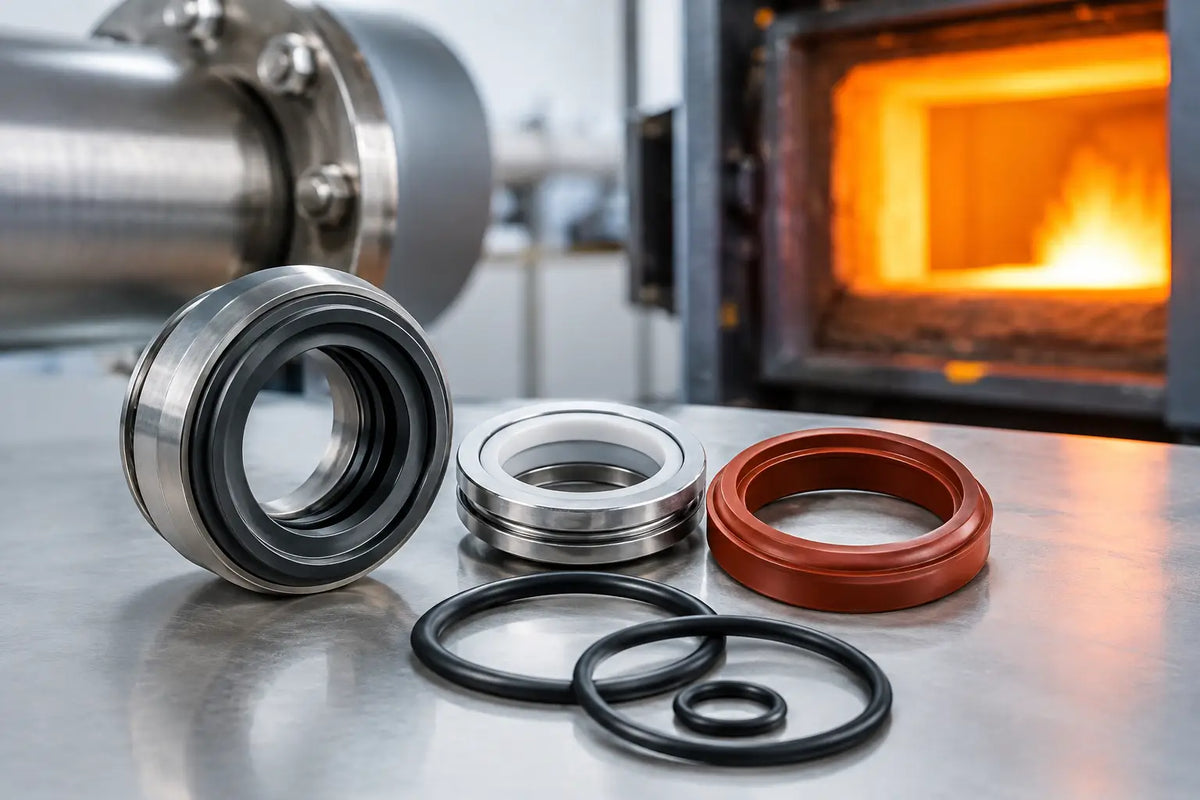
A seal that survives a 400°F temperature rating on paper can still fail quickly in a boom cylinder, gearbox, or engine assembly. When buyers ask which seal handles high temperatures, the correct answer is not simply “the highest-rated material.” Heat, pressure, fluid type, shaft speed, extrusion gap, and seal profile all determine whether a replacement part will last or create another downtime event.
For heavy equipment and industrial repairs, FKM and PTFE are usually the first materials to evaluate. They are not interchangeable. The right choice depends on the component, the working medium, and the actual temperature at the sealing lip or contact surface, not just the temperature shown by a machine gauge.
Which Seal Handles High Temperatures in Heavy Equipment?
For most high-temperature oil, fuel, and hydraulic applications, FKM is the practical first choice. Sold under names such as Viton® in some product ranges, FKM is a fluorocarbon elastomer with strong resistance to heat, petroleum oils, fuels, and many chemicals. Typical continuous operating limits are around 400°F, with short excursions higher depending on the compound and application.
For temperatures beyond the practical limit of elastomeric seals, PTFE is generally the better option. PTFE can tolerate roughly 500°F in many applications and has very low friction. It is widely used in rotary seals, piston seals, rod seals, valve sealing, and specialized hydraulic applications where heat, speed, or chemical exposure would damage rubber compounds.
That does not mean PTFE is automatically the best seal for every hot application. It is less elastic than FKM, may require energizers or carefully controlled hardware, and is less forgiving of damaged surfaces, incorrect dimensions, or poor installation. A PTFE seal selected without checking groove geometry and mating-surface condition can leak even when its temperature capability is more than adequate.
Temperature Ratings Are Only One Part of Seal Selection
A material data sheet may list a maximum temperature, but that figure does not guarantee field performance. A rotary oil seal running against a worn shaft sleeve at high RPM sees frictional heat at the lip. A hydraulic cylinder may experience pressure spikes and local heating that exceed the reservoir temperature. A seal installed close to an exhaust-side engine component can be exposed to radiant heat that is not reflected in the oil temperature.
Continuous temperature is more damaging than a brief peak. An FKM oil seal exposed to 390°F continuously may harden, lose elasticity, and develop a compression set sooner than one exposed to occasional 420°F spikes. The same principle applies to NBR, HNBR, polyurethane, and silicone materials. Always compare the expected continuous service temperature with the compound’s continuous rating, then allow an operating margin where possible.
The media matters just as much. A seal that performs well in hot hydraulic oil may not be suitable for hot steam, glycol coolant, aggressive chemicals, or high-aromatic fuel. Material selection must match both heat and fluid compatibility.
Common High-Temperature Seal Materials
FKM for Hot Oil, Fuel, and General Industrial Service
FKM is common in high-temperature radial oil seals, O-rings, gaskets, and static sealing positions. It offers a useful balance of heat resistance, oil resistance, and service life for engines, transmissions, pumps, gearboxes, and industrial machinery.
Use FKM when the application involves mineral oil, lubricants, diesel fuel, many hydraulic fluids, or elevated-temperature air. It is often the upgrade from standard NBR when a conventional oil seal hardens prematurely from heat.
The trade-off is cost and low-temperature flexibility. FKM is usually more expensive than NBR, and some FKM compounds become less flexible in very cold service. For a machine operating across extreme seasonal temperatures, confirm the full temperature range rather than selecting only for the hottest condition.
PTFE for Extreme Heat, Speed, and Chemical Resistance
PTFE is the material to consider when conventional rubber seals cannot maintain their properties. It handles high temperatures, many aggressive media, dry-running conditions in certain designs, and high sliding speeds better than most elastomers.
PTFE rotary shaft seals are often used where lip speed and heat would overload rubber oil seals. PTFE piston and rod seals can also suit hydraulic cylinders with demanding temperature or friction requirements. Filled PTFE grades may improve wear resistance, while spring-energized designs can maintain contact load as conditions change.
Its limitation is installation sensitivity. Many PTFE lip seals require a clean, burr-free shaft, correct lead-in chamfer, and controlled installation method. Do not stretch, fold, or force a PTFE seal over damaged threads or sharp keyways. If the installation sleeve is missing, correct it before fitting the part.
HNBR for Elevated Hydraulic and Engine Conditions
HNBR provides better heat, oil, and abrasion resistance than standard NBR. It is frequently used in hydraulic equipment, engine systems, and applications where NBR is operating close to its limit but PTFE or FKM is not required.
A typical HNBR compound may handle continuous temperatures around 300°F, depending on formulation. It can be a cost-effective option for seal kits where improved temperature resistance and physical durability are needed. However, it does not replace FKM in consistently high-temperature fuel or oil service.
Silicone and EPDM for Specific Media
Silicone has excellent high-temperature flexibility and can work at temperatures around 400°F or higher in suitable static applications. It is useful for hot air and certain non-oil environments, but it is not normally the first choice for abrasive, high-pressure hydraulic duty because its tear and wear resistance are limited.
EPDM performs well with hot water, steam, brake fluid, and glycol-based coolant. It should not be used with petroleum oils or mineral-oil hydraulic fluids. This is a common material-selection error: a seal may have the right temperature rating but fail because the fluid attacks it.
Match the Seal Type to the Failure Risk
Material alone does not solve a seal failure. A high-temperature oil seal needs the correct lip design, spring arrangement, housing fit, shaft finish, and shaft hardness. A hydraulic rod seal also needs proper backup-ring support if pressure and extrusion gap are high.
For hydraulic cylinders, heat often appears with pressure, contaminated fluid, side loading, and worn rod surfaces. A hot-running cylinder may need more than a new rod seal. Check the piston seal, buffer seal, wiper, wear rings, O-rings, and backup rings as a system. Installing one premium seal into a damaged gland or scored rod will not produce a reliable repair.
For rotating equipment, inspect the shaft sealing track. A groove at the old oil-seal lip can defeat a new FKM or PTFE seal. Measure the shaft diameter, housing bore, and seal width. Verify whether the shaft rotates, the housing rotates, or the application needs a cassette seal, dual-lip design, or dust-exclusion lip.
A Practical Selection Process Before Ordering
Start with the existing part number, equipment model, and component location. A boom-cylinder seal kit, travel-motor oil seal, crankshaft seal, and hydraulic pump seal may all use high-temperature materials, but they have different profiles and installation requirements.
Then confirm the dimensions: inside diameter, outside diameter, width, cross-section, groove dimensions, and any relevant lip or spring configuration. Do not order by diameter alone when replacing hydraulic seals. Two seals with similar measurements can have different lip geometry, pressure direction, and energizer design.
Next, identify the actual fluid and highest sustained temperature. Include pressure, speed, and exposure to dirt, water, or abrasive contamination. If the machine runs in a high-heat environment, state that requirement when matching the part. It can determine whether an NBR seal is acceptable, whether an HNBR or FKM upgrade is needed, or whether the job calls for PTFE.
Finally, check the surrounding components. Heat-damaged seals often leave clues: hardening, cracking, glazing, carbon deposits, a flattened cross-section, or melted backup rings. Find the cause before fitting replacements. A blocked cooler, incorrect oil grade, worn bearing, misaligned rod, excessive pressure setting, or contaminated fluid can destroy the new seal just as quickly.
When an Upgrade Makes Commercial Sense
A material upgrade is worthwhile when repeat failures are linked to temperature, the machine is difficult to access, or unplanned downtime costs more than the difference in part price. FKM oil seals and PTFE sealing solutions can reduce repeat labor in the right application, especially on high-use equipment in construction, mining, lifting, and material handling.
An upgrade is not a substitute for correct fitment. For urgent repairs, verify the OEM number, machine model, cylinder position, and dimensions before dispatch. MXPseal stocks machine-specific seal kits and industrial sealing components so maintenance teams can match the repair to the actual equipment rather than making a costly near-fit work.
The best high-temperature seal is the one that matches the heat, fluid, pressure, movement, and hardware condition of the job. Confirm those five points before ordering, and the replacement is far more likely to stay in service when the machine is working at full load.