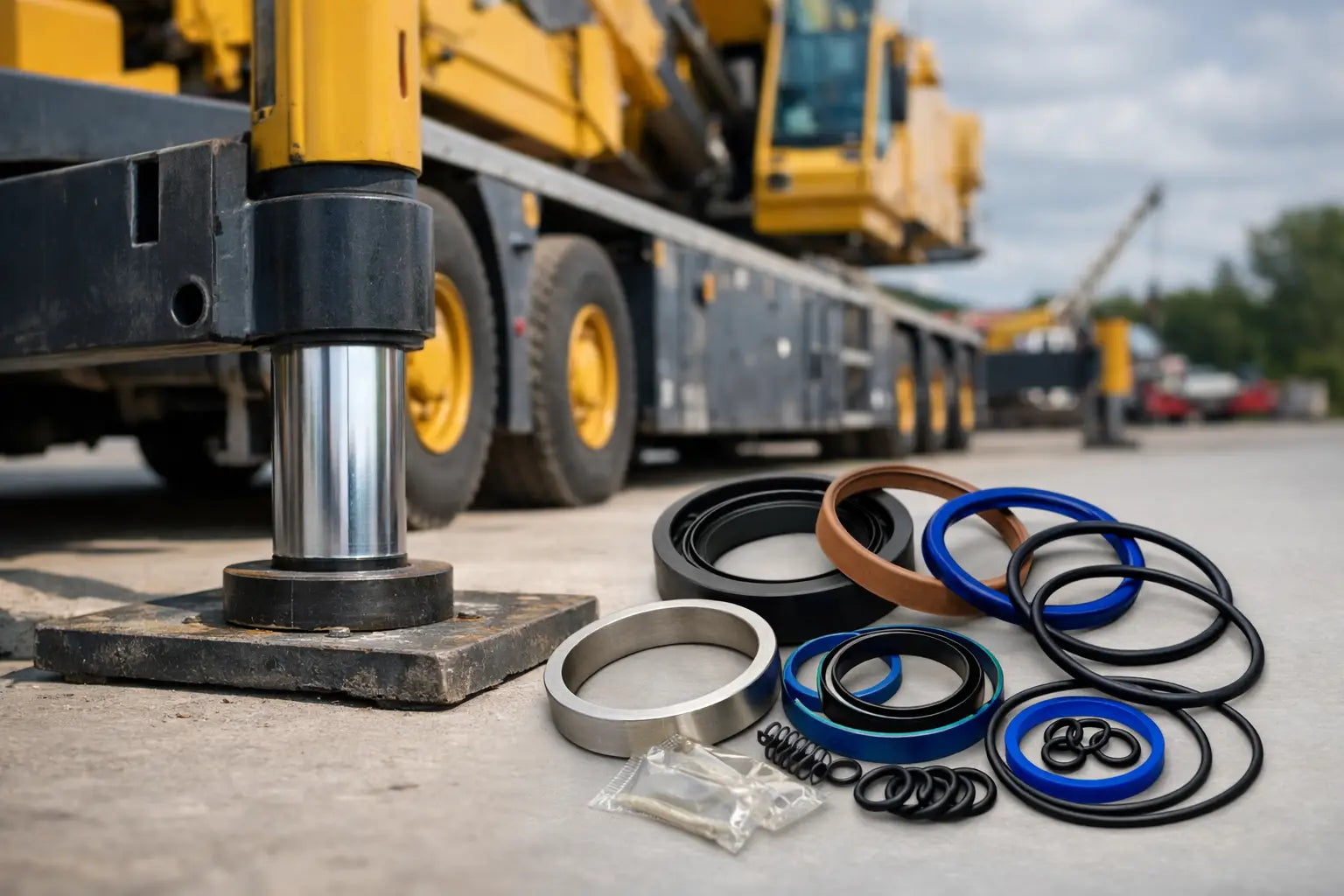
A crane that will not hold level is not a minor hydraulic issue. A leaking stabilizer cylinder can delay a lift, create a safety concern, and keep an otherwise serviceable machine out of work. Selecting the correct crane outrigger cylinder seal kit starts with identifying the exact cylinder, not simply the crane brand or model.
Outrigger systems often use different cylinders for extension, vertical support, and beam movement. Even on the same crane, left and right positions may carry different part numbers, rod diameters, or gland configurations. A kit that appears close can still fail to fit, leak under pressure, or damage the cylinder during installation.
Why Outrigger Cylinder Kit Matching Matters
An outrigger cylinder works under changing side loads, pressure spikes, weather exposure, and contamination from job sites. Its seals must control hydraulic oil at the rod, piston, and gland while keeping dirt and moisture out of the cylinder. When a rod seal starts weeping or a wiper is torn, replacing only the visible failed seal can be a false economy if the remaining seals are hardened, worn, or incompatible with the hydraulic fluid.
A complete cylinder seal kit normally covers the internal sealing points required during a proper rebuild. Depending on the cylinder design, this can include a rod seal, wiper seal, piston seal, guide ring or wear ring, O-rings, backup rings, and static gland seals. The exact contents vary by manufacturer and cylinder series. Never assume that two kits with a similar-looking rod seal are interchangeable.
For fleet maintenance teams, accurate matching reduces repeat labor and avoids unnecessary cylinder removal. For repair shops, it also protects turnaround time. A machine parked while the correct kit is being sourced is a cost that can exceed the price difference between a verified kit and an unconfirmed alternative.
Identify the Exact Crane Outrigger Cylinder Seal Kit
The fastest route to a correct replacement is the OEM part number from the existing kit, cylinder, or machine parts manual. Where that number is unavailable, use a combination of equipment information and measured cylinder data.
Start with the crane make, model, serial number range, and the precise cylinder application. Record whether the cylinder is for an outrigger jack, stabilizer leg, horizontal extension beam, front support, rear support, left side, or right side. Terms differ between manufacturers, but cylinder location is essential fitment data.
Next, inspect the cylinder body and gland for stamped numbers, labels, or casting codes. A cylinder assembly number can be more useful than the general machine model because manufacturers may change cylinder suppliers or seal designs during a production run. If the cylinder has been rebuilt before, verify that it still uses its original gland and piston configuration.
When part numbers cannot be confirmed, measure the components after disassembly. The key dimensions are rod diameter, cylinder bore, piston diameter, seal groove width, groove depth, gland bore, and applicable O-ring cross section. Measure clean, undamaged surfaces with suitable calipers. Worn seals are not reliable measurement references because heat, compression set, and swelling can alter their dimensions.
Photographs can support identification, especially for uncommon lip profiles or multi-piece piston seals. They should not replace measurements or part-number verification. A clear image of the cylinder tag, removed seals, and caliper readings gives a parts supplier a much stronger basis for checking fitment.
Check the Seal Profile, Not Just the Diameter
Two seals may share an inside diameter and outside diameter but use different profiles. A single-acting U-cup, double-acting piston seal, compact seal, or loaded lip seal can require a specific groove geometry. Installing the wrong profile may cause bypass, excessive friction, extrusion, or early wear.
Material selection also matters. Nitrile is widely used for standard mineral hydraulic oil applications, while polyurethane is often selected for abrasion resistance and dynamic rod sealing. High-temperature, specialty-fluid, or severe-duty applications may require different elastomers. The right material depends on the hydraulic fluid, operating temperature, pressure, cylinder condition, and duty cycle.
Do not overlook backup rings. On high-pressure outrigger cylinders, they help prevent O-rings or seals from extruding into clearance gaps. If the original design uses a backup ring, omitting it can shorten the life of a new repair.
Inspect the Cylinder Before Ordering Seals
A seal kit cannot correct mechanical damage. Before placing an order, inspect the rod chrome, gland, piston, bore, threads, and retaining hardware. A scored rod can cut a new rod seal within hours. Pitting in the chrome allows oil to pass and brings contamination into the gland area. A damaged bore can prevent a piston seal from maintaining pressure.
Check the wiper area closely. Outrigger cylinders work near mud, grit, aggregate dust, and standing water. If the wiper has failed, contamination may already be inside the cylinder. Flush the cylinder and inspect for particles before reassembly. Replacing seals without cleaning the system risks damaging every new component on the first few strokes.
Guide rings and wear bands deserve the same attention. Their job is to keep metal surfaces separated and control side loading. Excessive wear can let the piston or rod contact the bore, leading to scoring and unstable seal performance. If wear rings are included in the kit, replace them. If they are not, confirm whether they need to be ordered separately.
Repair Practices That Protect the New Kit
Before servicing an outrigger cylinder, lower the machine safely, remove load from the system, isolate hydraulic power, and follow the crane manufacturer’s lockout and support procedures. Outrigger circuits can retain pressure. Never rely on a hydraulic cylinder alone to support equipment during repair.
Keep the work area clean and organize each removed component in order. Use installation tools that will not nick sealing lips or scratch the gland. Sharp threads, ports, and retaining grooves should be protected with an installation sleeve or tape as appropriate. Lubricate seals with compatible clean hydraulic oil unless the seal manufacturer specifies otherwise.
During assembly, make sure directional seals face the correct way. This is especially important for piston seals and rod seals designed to hold pressure from one side. Forcing a seal into a groove, twisting it, or installing it dry can create a leak that may not appear until the cylinder is returned to full service.
After reinstallation, cycle the outrigger slowly at low load to purge air and check for leakage. Then inspect the cylinder through its full stroke. A repair should be checked under normal operating pressure, with attention to rod leakage, drift, uneven extension, and signs of external oil around the gland.
What to Provide When Sourcing a Replacement Kit
Parts procurement moves faster when the request contains usable fitment information. The most helpful details are the crane manufacturer and model, serial range, cylinder location, cylinder assembly number, OEM seal kit number, and any readable markings from the old seals. If no identifiers are available, provide the measured rod, bore, and groove dimensions along with clear photos.
Avoid ordering based only on a phrase such as “crane outrigger seals.” That description may cover several cylinders across one machine platform. A boom cylinder kit, extension cylinder kit, and outrigger jack cylinder kit can all be listed for the same crane but have entirely different contents.
For urgent maintenance, confirm stock status before stripping down the cylinder when possible. Check whether the listing identifies the equipment application, cylinder position, OEM reference, and kit contents. A ready-stock kit with verified fitment supports a faster repair than a generic set that requires modification or return.
MXPseal supports this type of parts search with equipment-specific kits, dimensional seal options, and cross-brand inventory for heavy-equipment repairs. Supplying complete identification details at the start helps confirm the right part and keeps dispatch focused on the kit your cylinder actually requires.
A correctly matched seal kit is only one part of a dependable outrigger repair. Pair it with a clean rebuild, inspection of rod and bore condition, and a controlled function test before the crane returns to lifting work.