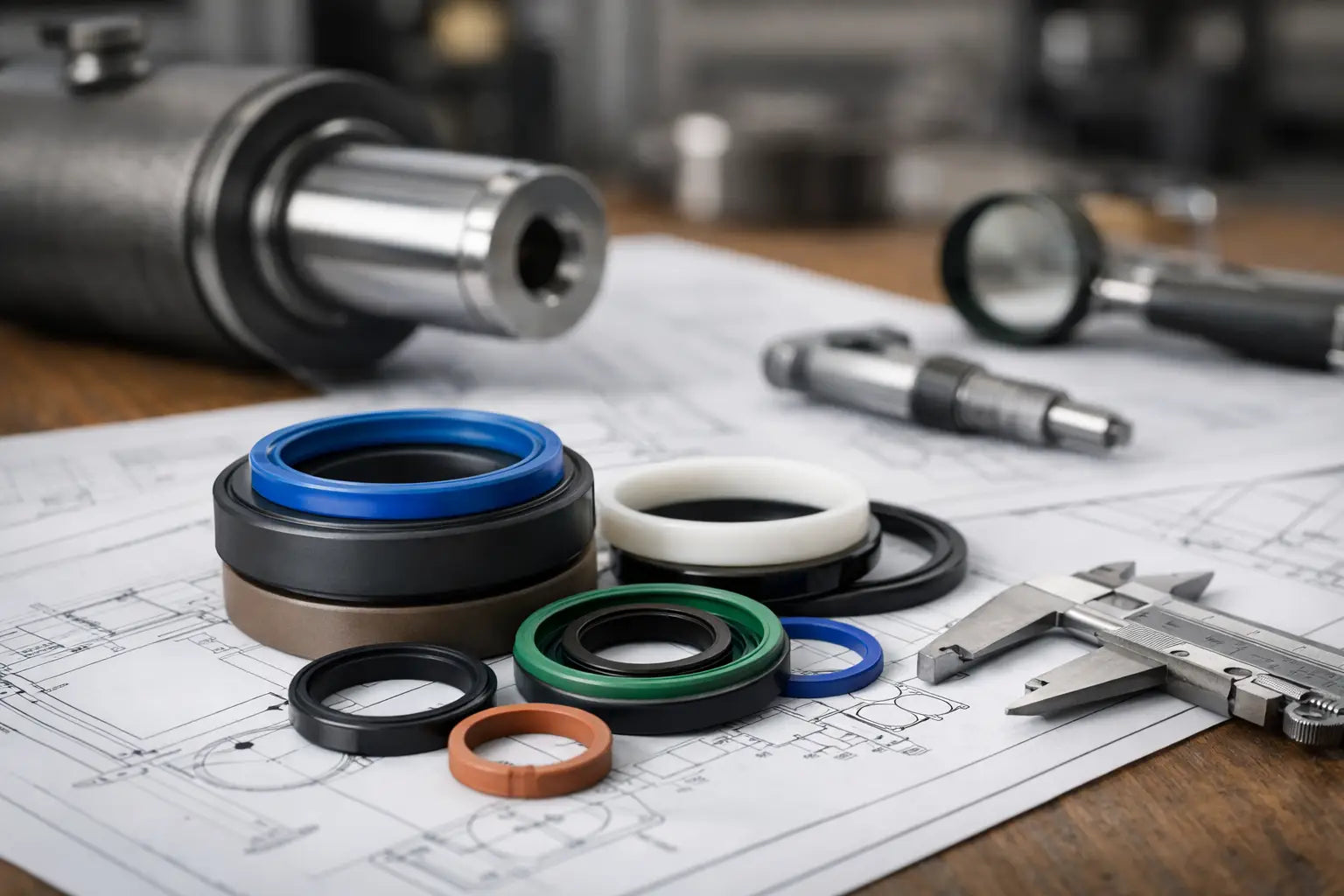
A hydraulic seal kit by dimensions is often the fastest route to a repair when the OEM part number is missing, unreadable, or no longer available. It only works when the measurements describe the actual sealing locations in the cylinder, not just the old seals on the bench. A kit that is close in size can install easily and still fail under pressure, score a rod, or allow external leakage within a few operating hours.
For hydraulic-cylinder repair teams, the target is not simply to find seals with a similar inside diameter. The target is to restore correct fit, sealing force, friction, and service life at the rod, piston, gland, and barrel. Accurate measurement gives buyers a reliable way to identify replacement components, verify a proposed kit, and avoid repeat teardown.
Start With the Cylinder, Not the Old Seal
Used seals are useful references, but they should not be the primary source of dimensions. Heat, pressure, wear, chemical exposure, and installation damage can change their shape. A lip seal may be flattened, a wear ring may be worn thin, and an O-ring may have taken a permanent compression set. Measuring the removed part alone can lead to an incorrect order.
Measure the cleaned metal components of the cylinder wherever possible. For a double-acting cylinder, record the cylinder bore, piston diameter, rod diameter, gland bore, and the width and depth of each seal groove. Use a calibrated vernier caliper or micrometer for critical diameters. A tape measure is acceptable for a rough cylinder check, but it is not accurate enough for selecting a rod seal, piston seal, or backup ring.
Before measuring, inspect the parts for wear. A badly worn rod, oval bore, damaged gland, or corroded groove can make a correct new seal look like a poor fit. If the rod chrome is pitted or the bore has deep scoring, replacing seals alone may not provide a lasting repair.
The dimensions that matter
The required dimensions depend on the position of the seal. A rod seal is selected around the rod diameter and housing bore, while a piston seal is selected around the piston diameter and cylinder bore. Wiper seals, static O-rings, guide rings, and buffer seals each use different reference points.
For a typical cylinder, record these details before requesting or ordering a kit:
- Rod diameter at the seal running surface
- Cylinder bore diameter
- Piston diameter and piston groove dimensions
- Gland bore and rod-seal housing dimensions
- Groove width and groove depth for each component
- Existing seal profile, material, and installation direction
How a Hydraulic Seal Kit by Dimensions Is Matched
Dimensional matching starts by separating dynamic and static sealing positions. Dynamic seals move against a surface and must control leakage without generating excessive friction. Static seals remain compressed in a fixed joint and primarily need to hold pressure without extrusion or chemical breakdown.
A rod-seal set commonly includes a wiper, rod seal, buffer seal, O-ring, backup ring, and guide ring, though the exact content depends on cylinder design. The wiper excludes dirt, water, and abrasive contamination from the rod. The buffer seal protects the main rod seal from pressure spikes. The rod seal contains hydraulic fluid. Guide rings prevent metal-to-metal contact and help keep the rod centered.
A piston-seal set may include a piston seal, wear rings, and static seals for the piston assembly. Some pistons use compact seals, others use U-cups, chevron packing, cast-iron rings, or combined piston seal and guide-ring arrangements. Dimensions alone cannot replace profile identification in these cases. A 50 mm rod seal is not interchangeable with every other 50 mm rod seal because the housing dimensions, lip geometry, pressure capability, and material may differ.
Measure the groove, then verify the profile
Groove dimensions determine whether the seal will have the required squeeze and clearance. The groove width must accommodate the seal without pinching it or allowing excessive side movement. Groove depth controls compression. Extrusion gaps matter on high-pressure cylinders, especially where the rod or bore has wear.
Confirm whether the original seal is a U-cup, lip seal, compact seal, step seal, chevron ring, energized PTFE seal, or another profile. Note the direction of the sealing lip before removal. A single-acting seal installed backward will not control pressure correctly. For double-acting applications, make sure the replacement is designed to seal in both directions or that paired seals are positioned correctly.
When an old seal is too damaged to identify, compare the groove dimensions and application with a known cylinder kit or technical seal profile. Part number confirmation is still preferable when available. Dimensions provide the fitment foundation; the profile confirms function.
Material Choice Affects Service Life
The same nominal dimensions can be supplied in very different materials. Standard nitrile rubber, commonly called NBR, is widely used with mineral hydraulic oil and is suitable for many construction and industrial cylinders. Polyurethane is often selected for rod seals and wipers because it offers strong abrasion resistance and good performance in demanding mobile-equipment work.
Fluorocarbon materials may be needed for higher temperatures or specific fluids, while PTFE-based seals can offer low friction and excellent chemical resistance. These materials may require energizers, special installation methods, or tighter control of surface finish. They are not automatically the best option for every repair.
Operating conditions decide the right trade-off. A cylinder working on a dusty excavator attachment needs strong contamination control and abrasion resistance. A high-cycle forklift or industrial press may prioritize low friction and heat control. A cylinder exposed to nonstandard fluid, elevated temperature, or aggressive washdown requires material compatibility checks before purchase.
Do not substitute material solely because it is available. The cost of a wrong kit is not limited to the seal price. It can include another teardown, lost machine hours, hydraulic-oil loss, and damage to the rod or barrel.
Common Measurement Errors That Cause Repeat Repairs
The most frequent error is confusing bore diameter with piston diameter, or rod diameter with gland bore. These values may be close enough to create confusion, but they refer to different sealing surfaces. Label every measurement as you take it.
Another common issue is reading metric and inch dimensions as interchangeable. Heavy equipment commonly uses metric sizes, but replacement cylinders and imported equipment may use inch-based dimensions. Convert only when necessary, and retain the original measured value. A nominal conversion can hide a meaningful difference in groove fit.
Buyers should also account for component wear. If a rod measures below nominal size because of wear or chrome damage, ordering a seal for the worn measurement may be the wrong decision. Determine the original size and decide whether rod repair or replacement is required. The same principle applies to an enlarged or damaged gland housing.
Finally, do not assume every kit includes every item needed for a complete rebuild. Kit contents vary by cylinder design and supplier. Verify the count and type of seals against the parts removed from the cylinder, particularly wear rings, backup rings, piston O-rings, and gland static seals.
A Practical Ordering Check for Repair Shops
For urgent maintenance work, send or retain a clear specification: machine make and model, cylinder location, OEM or cylinder number, rod diameter, bore diameter, and photos of the removed seals beside a scale. Add groove measurements when the profile is uncertain. This creates a usable record for the current job and future repeat repairs.
MXPseal can support dimensional and equipment-specific sourcing where a known kit number, machine application, or accurate measurement set is available. For fleet operators, recording verified seal-kit details against each asset turns the next cylinder repair into a faster procurement task rather than another identification exercise.
Before installation, clean the gland and piston grooves, remove burrs, inspect lead-in chamfers, lubricate with a compatible hydraulic fluid, and use proper installation tools. Forcing a seal over a sharp edge can cut the lip before the cylinder is assembled. After repair, cycle the cylinder at low load and inspect for leakage before returning the machine to full duty.
The best dimensional match is the one supported by clean measurements, correct seal profile, compatible material, and a sound cylinder surface. Take those readings before the machine is down for long, and the next seal-kit order can move from diagnosis to dispatch with far less risk.