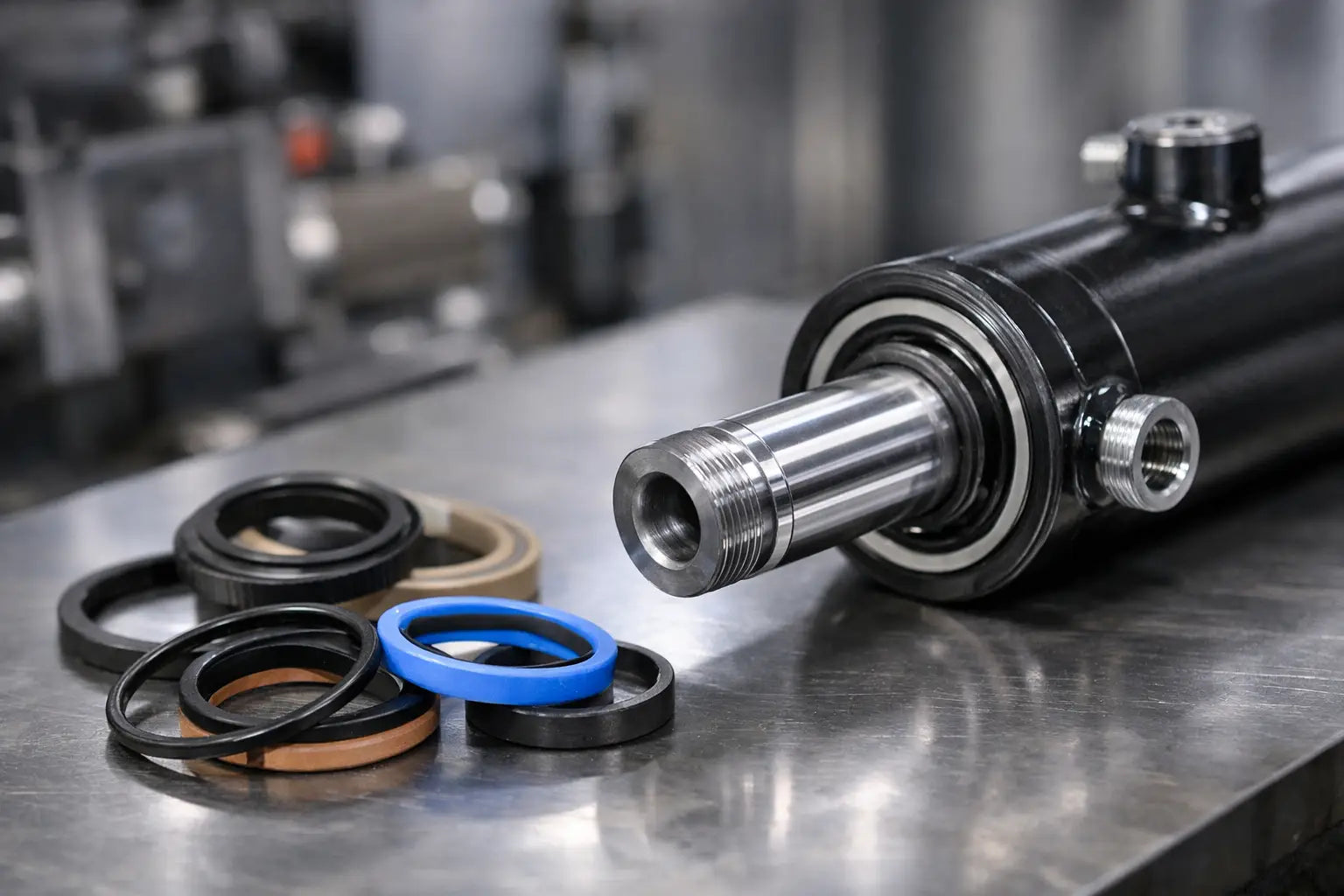
A rod seal can look correct on the bench and still fail within days if the profile, material, or groove fit is wrong. For cylinder repair shops and fleet maintenance teams, knowing how to select rod seals means checking more than the rod diameter. The seal must match the gland geometry, hydraulic fluid, operating pressure, rod condition, and the machine’s actual working environment.
A leaking boom, bucket, tilt, steering, or lift cylinder does not only consume oil. It can stop a machine from returning to work, create a contamination issue, and turn a routine reseal into a repeat repair. Start with the cylinder specification or old seal profile, then verify every critical measurement before ordering.
Start With What the Rod Seal Must Do
The rod seal is the dynamic pressure seal installed in the cylinder head or gland. It seals against the moving piston rod and prevents hydraulic oil from escaping as the rod extends and retracts. In most heavy-equipment cylinders, it works alongside a wiper seal and, in higher-pressure or demanding applications, a buffer seal.
These components have separate jobs. The rod seal retains hydraulic fluid. The wiper removes dirt, water, and abrasive material from the rod before it enters the gland. A buffer seal reduces pressure spikes reaching the primary rod seal. Replacing only the visibly damaged seal can be a false economy if the full gland seal arrangement is worn, contaminated, or incorrectly assembled.
Before selecting a replacement, identify whether you are working on a hydraulic cylinder, pneumatic cylinder, or a mixed-service application. Hydraulic rod seals handle pressurized oil and require material compatibility with the system fluid. Pneumatic seals are designed for air service, lower lubrication, and different friction requirements. Do not substitute one for the other based on size alone.
How to Select Rod Seals by Size and Profile
The first rule is simple: measure the actual parts. Do not rely only on a machine model, cylinder description, or an old seal that may have swollen, hardened, or worn down in service.
For a rod seal, confirm the piston rod diameter, gland bore diameter, groove width, and groove depth. If possible, measure the removed seal’s inside diameter, outside diameter, and height as a reference, but use the metal gland dimensions as the final authority. A caliper is suitable for initial checks; a micrometer and bore gauge give better accuracy when tolerances are tight or the cylinder is large.
A seal marked with the same nominal dimensions as another seal may still have a different cross-section. A U-cup, compact seal, step seal, lip seal, and loaded PTFE rod seal can all fit different groove designs. The sealing lip geometry, anti-extrusion features, installation direction, and required groove tolerances vary by profile.
Confirm the Seal Orientation
Most hydraulic rod seals install with the open pressure side facing the hydraulic fluid inside the cylinder. This allows system pressure to energize the sealing lip against the rod. Installing a U-cup backward is a common cause of immediate leakage.
Do not assume every profile follows the same rule. Some compact seals have asymmetrical lips, while PTFE sealing rings may use separate energizers or support rings. Check the profile drawing or seal kit layout before assembly, particularly when rebuilding unfamiliar cylinders from excavators, cranes, forklifts, wheel loaders, or agricultural machinery.
Use Part Numbers When They Are Available
An OEM cylinder kit number, manufacturer seal number, or clearly identified equipment part number is often the fastest path to correct fitment. It is especially useful for machine-specific boom, arm, bucket, lift, steering, and tilt cylinders where several similar cylinder sizes were used across one equipment series.
Part-number matching should still be supported by dimensions. Machines may have replacement cylinders, aftermarket glands, or production changes that make a catalog match incomplete. When downtime is costly, provide the machine model, cylinder location, part number, and measured dimensions together. That reduces the chance of ordering a seal that is close but not correct.
Match the Seal Material to the Service Conditions
Material choice affects leakage control, friction, wear life, and resistance to heat or chemical attack. The correct material depends on the fluid and the working conditions, not simply on what was installed previously.
Polyurethane is widely used for hydraulic rod seals because it offers strong abrasion resistance, good tear strength, and dependable performance in mobile equipment. It is a practical choice for many construction, mining, and material-handling cylinders operating with standard mineral hydraulic oil.
Nitrile rubber, commonly called NBR, has good compatibility with petroleum-based hydraulic fluids and is used in many standard seal designs. It can be a suitable cost-controlled option where pressure, temperature, and contamination levels are within normal limits.
PTFE-based rod seals are used where low friction, chemical resistance, high speed, or demanding temperature conditions are priorities. They often require a correctly matched energizer and carefully controlled gland dimensions. PTFE can deliver excellent performance, but it is less forgiving of poor installation practices and incorrect profile selection.
FKM is selected for elevated-temperature service or fluids that are unsuitable for standard nitrile. It is not automatically the best upgrade for every cylinder. Its cost, low-temperature behavior, and compatibility with the complete seal arrangement must be considered before specifying it.
If the system uses biodegradable hydraulic oil, water glycol, fire-resistant fluid, or another nonstandard medium, verify compatibility with the seal manufacturer’s material data. A material that performs well in mineral oil may swell, soften, crack, or lose elasticity in another fluid.
Account for Pressure, Speed, and Side Load
Cylinder pressure matters because higher pressure increases the risk of extrusion. Extrusion occurs when seal material is forced into the clearance gap between the rod and gland. The result may be nibbling, torn lips, rapid leakage, or fragments entering the hydraulic system.
For high-pressure cylinders, look for a profile designed with anti-extrusion support or specify the appropriate buffer seal and backup arrangement. This is common in heavy-duty excavator attachments, hydraulic breakers, lifting equipment, and cylinders exposed to shock loading. A standard rod seal may fit the groove but may not survive pressure spikes.
Rod speed and cycle frequency also affect the choice. Fast cycling creates more heat and friction. Long-stroke cylinders operating continuously may need a low-friction design rather than a basic seal selected only for static pressure capacity. On the other hand, a low-speed cylinder carrying high side load may fail due to rod or bearing wear before the seal material itself reaches its limit.
Check the guide rings or wear bands during every reseal. Their job is to keep the rod and piston centered. If they are worn, the rod can move sideways under load, damaging the rod seal lip and creating uneven wear. Replacing a rod seal without correcting excessive clearance often leads to another leak shortly after installation.
Inspect the Rod and Gland Before Ordering Parts
A new seal cannot compensate for a damaged rod surface. Inspect the chrome rod for scoring, rust pits, dents, peeling chrome, and embedded contamination. Run a fingernail across suspect marks. If it catches, the defect can cut or wear the sealing lip during each stroke.
Also inspect the gland bore, seal groove corners, and lead-in chamfers. Sharp edges can slice a seal during installation. A distorted groove may prevent the seal from seating correctly, while corrosion in the gland can reduce the seal’s outside-diameter retention.
Rod surface finish matters as well. A surface that is too rough accelerates wear, while a surface that is excessively smooth may affect lubrication retention in certain applications. For most repair work, the practical decision is whether the rod meets the cylinder manufacturer’s acceptable condition. If it does not, repair or replace the rod before installing a new kit.
Avoid Common Ordering and Installation Errors
The most common mistake is ordering by diameter only. A 50 mm rod seal is not a complete specification without the gland bore, width, profile, and material. The next frequent error is substituting a visually similar seal because it is available immediately. Fast dispatch only helps when the part is correct.
Avoid mixing incompatible seal profiles in the same gland. A replacement rod seal may need a specific wiper, buffer, or spacer arrangement to maintain correct stack height and pressure control. If the original cylinder uses a complete seal kit, replacing the full kit is usually the safer route when the cylinder is already disassembled.
During assembly, use clean hydraulic oil or the approved assembly lubricant, protect the seal from sharp threads and keyways, and use an installation sleeve where required. Do not stretch a seal excessively or force it into the groove with a screwdriver. A small installation cut can become a major leak once pressure is applied.
After rebuilding, cycle the cylinder at low pressure first and inspect for leakage. Recheck after the machine reaches normal operating temperature. Some failures appear only after the rod has completed several strokes under working load.
Build a Faster Parts-Matching Process
For recurring maintenance work, record the cylinder location, equipment model, OEM part number, seal profile, dimensions, material, and previous failure mode. A simple repair record makes future procurement faster and helps identify whether a certain cylinder is failing because of contamination, rod damage, pressure spikes, or incorrect parts.
When urgent replacement parts are needed, send the supplier the complete information rather than a photo alone: machine make and model, cylinder application, part number, rod diameter, gland bore, groove width, and seal cross-section. MXPseal can match standard seal sizes, equipment-specific kits, and replacement parts more accurately when those details are available.
The right rod seal is the one that fits the actual gland and survives the actual job. Take a few extra minutes to verify dimensions, profile, material, and rod condition before ordering. That check is usually far less expensive than reopening a cylinder after the machine is back in service.