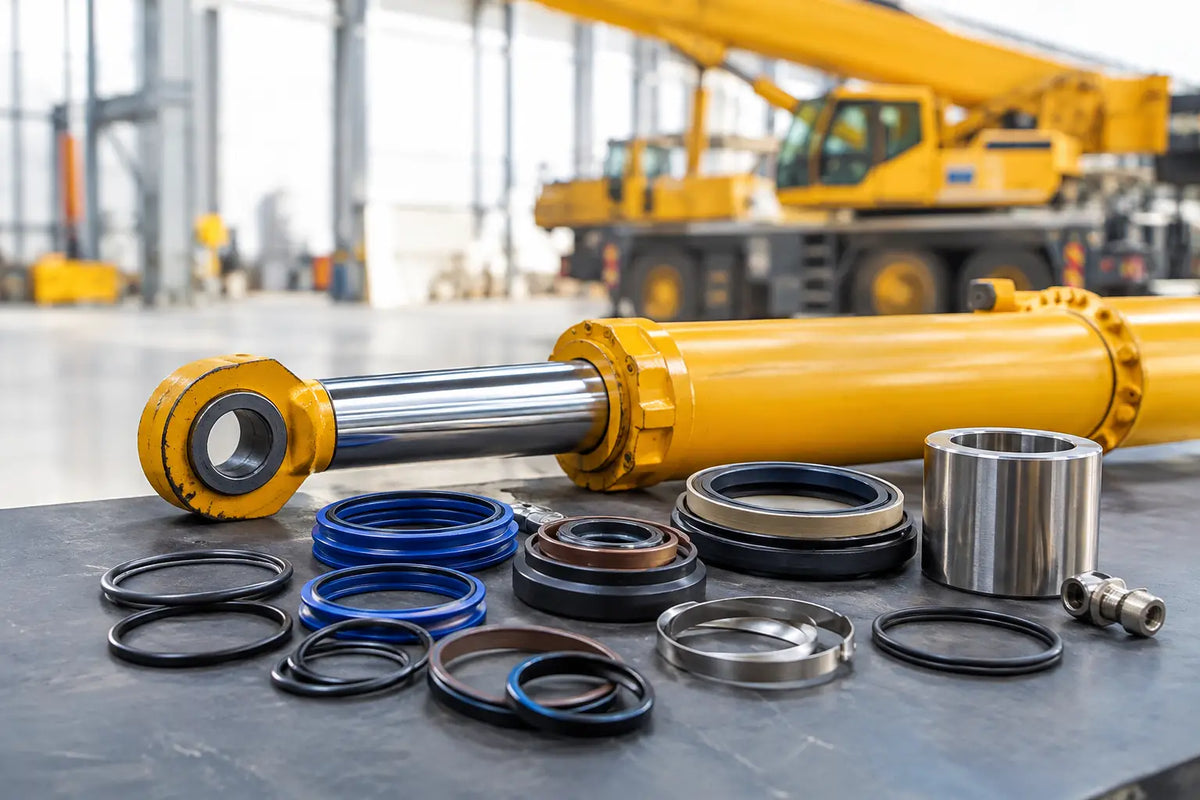
A crane held out of service by a leaking boom or outrigger cylinder is not waiting on a generic seal assortment. It needs the correct repair parts, identified before the cylinder is opened. The best top crane cylinder repair kits are selected by cylinder location, OEM reference, and verified dimensions - not by machine brand alone. That approach prevents repeat repairs, incorrect seal profiles, and further downtime at the jobsite or in the workshop.
Top Crane Cylinder Repair Kits Start With Correct Identification
A crane can have multiple hydraulic cylinders that look similar in a parts list but use different seals. Boom lift, telescopic extension, luffing, outrigger, steering, suspension, and counterweight cylinders may each have their own bore, rod diameter, groove design, and working conditions. Even two boom cylinders on related crane models can require different kits after a production revision.
Start with the equipment manufacturer, crane model, serial number, cylinder function, and OEM part number where available. A cylinder assembly number is often more useful than the crane model by itself. If the original kit number has been superseded, cross-reference it only after confirming the cylinder application and measurements.
When no readable part number is available, identify the cylinder from the hardware. Record the barrel bore, piston rod diameter, seal groove dimensions, piston configuration, gland style, and overall cylinder position. Clear photos of the old seals, gland, piston, and identifying marks also help distinguish an equipment-specific kit from a standard dimensional kit.
Match the kit to the cylinder position
Cylinder position is a primary fitment field. A BOOM KIT is not automatically suitable for an extension cylinder, and an OUTRIGGER KIT may vary between front and rear stabilizers. The load path, stroke length, side loading, and exposure to contamination influence the seal arrangement used by the manufacturer.
For mobile and truck cranes, outrigger cylinders often face frequent dirt, moisture, and mechanical damage at the rod. A kit with the correct heavy-duty wiper and rod seal profile matters as much as the piston seal. Telescopic boom cylinders can be more sensitive to low-friction wear rings, guide elements, and precise piston sealing because internal bypass reduces extension performance under load.
Confirm the seal profiles, not only the dimensions
A 100 mm bore and 70 mm rod measurement narrows the search, but it does not identify every seal. Rod seals can be U-cups, compact seals, stepped seals, or energized profiles. Piston seals may use a single polyurethane profile, a cast-iron ring arrangement, or a multi-piece assembly with elastomer and thermoplastic components.
The replacement profile must suit the existing gland and piston grooves. Forcing a near-match seal into the wrong groove can cause extrusion, high breakaway friction, rapid wear, or leakage immediately after installation. Compare the cross section and groove width with the removed component whenever possible.
Check what is included in the repair kit
A complete crane cylinder kit commonly contains the rod seal, wiper, piston seal, static O-rings, backup rings, and guide or wear rings required for that assembly. Contents vary by design. Some kits are gland kits only, while others cover both the piston and gland.
Do not assume a listing described as a cylinder seal kit includes every non-sealing service item. Bushings, pins, retaining rings, rod-end bearings, and gland nuts are separate components unless specifically stated. Checking the kit contents before teardown helps the repair team order related parts in the same dispatch.
What Separates a Good Kit From a Cheap Near-Match
Price matters, especially for fleet maintenance and rental operations, but the lowest-cost kit can become the most expensive option if the cylinder has to be removed twice. A proper replacement kit needs material compatibility, accurate machining tolerances, and reliable identification.
For most crane hydraulic cylinders, polyurethane and high-grade nitrile compounds are common choices for dynamic sealing, while PTFE-based or fabric-reinforced elements may be used where friction, pressure, or temperature demands are higher. The right material depends on the hydraulic fluid, operating temperature, pressure cycling, and contamination level. A seal suitable for a lightly used shop hydraulic cylinder is not necessarily appropriate for an exposed crane cylinder working daily on a construction site.
Pay attention to the condition of the metal components as well. New seals cannot compensate for a scored rod, damaged chrome, pitted barrel, worn gland bore, or excessive piston-to-barrel clearance. If the rod surface has corrosion pits in the seal travel area, the new rod seal may fail quickly. If wear rings have broken down, the piston can contact the barrel and damage both the cylinder and replacement seals.
Information to Have Ready Before Ordering
The fastest way to source a crane cylinder repair kit is to provide complete identification at the start. A parts buyer or repair technician should have these details available:
- Crane make, model, serial number, and year where known
- Cylinder application, such as boom lift, boom extension, outrigger, steering, or suspension
- OEM cylinder number and existing seal-kit number
- Bore diameter, rod diameter, and key groove measurements if part numbers are unavailable
- Photos of the cylinder tag, gland, piston, and removed seals
- The hydraulic fluid used and any unusual operating temperature or contamination conditions
Choose Ready Stock When Downtime Is Already Costing Money
Crane maintenance schedules are rarely flexible once a cylinder is leaking. A machine may be committed to a lift plan, rental contract, shutdown window, or transport schedule. Waiting for an incorrectly identified kit adds labor cost and can delay the return to service more than the original failure.
Ready-stock availability is therefore a practical selection factor, not just a purchasing convenience. A supplier with inventory across OEM-style equipment kits, standard hydraulic seal profiles, oil seals, bearings, and related cylinder components can simplify urgent procurement. MXPseal supports this type of repair with catalog-led identification by manufacturer, equipment application, part number, and dimensions, allowing buyers to match parts more accurately before dispatch.
Fast dispatch only helps when the order is correct. For that reason, verify the SKU description against the cylinder location and reference number, then review any stated measurements before purchase. If the cylinder has already been stripped, keep the removed seal set organized in installation order. That makes it easier to compare each piece and spot a missing backup ring or wear band before reassembly.
Installation Practices That Protect the New Kit
Cleanliness determines much of the life of a new cylinder kit. Flush contamination from the barrel, clean the piston and gland thoroughly, and inspect all edges that will pass over the seals. A small burr on a thread, port edge, or retaining groove can cut a new seal during assembly.
Use proper installation tools rather than sharp picks or screwdrivers. Lubricate seals with compatible clean hydraulic fluid or assembly lubricant, and install directional seals in the correct orientation. Rod seals and wipers are commonly damaged when they are stretched beyond their limits or pressed into a contaminated gland.
After reassembly, cycle the cylinder slowly at low load and inspect for external leakage. Then test it through its normal range while watching for drift, uneven movement, pressure loss, or rod movement under a held load. Internal bypass may not show as visible oil leakage, so performance testing is part of the repair, not an optional final check.
When a Repair Kit Is Not the Whole Fix
A seal kit is the right answer when wear, age, contamination, or normal service has degraded the sealing elements and the cylinder hardware remains within specification. It is not a substitute for correcting the cause of failure. Side loading from worn pins or bushings, a bent rod, contaminated oil, overpressure, and damaged chrome will shorten the life of any new kit.
If the cylinder repeatedly leaks at the rod, inspect the rod surface and guide clearance before fitting another seal. If it drifts under load after a new piston kit, check the piston, barrel, control valve, and hydraulic circuit rather than assuming the new seals are defective. The best repair is the one that returns the crane to service and prevents the same cylinder from coming back to the bench next week.
Accurate fitment takes a few more minutes before ordering, but it is time well spent. Match the kit to the exact crane cylinder, inspect the surrounding hardware, and keep the required parts ready before disassembly. That is how a cylinder repair becomes a controlled maintenance job instead of another source of downtime.