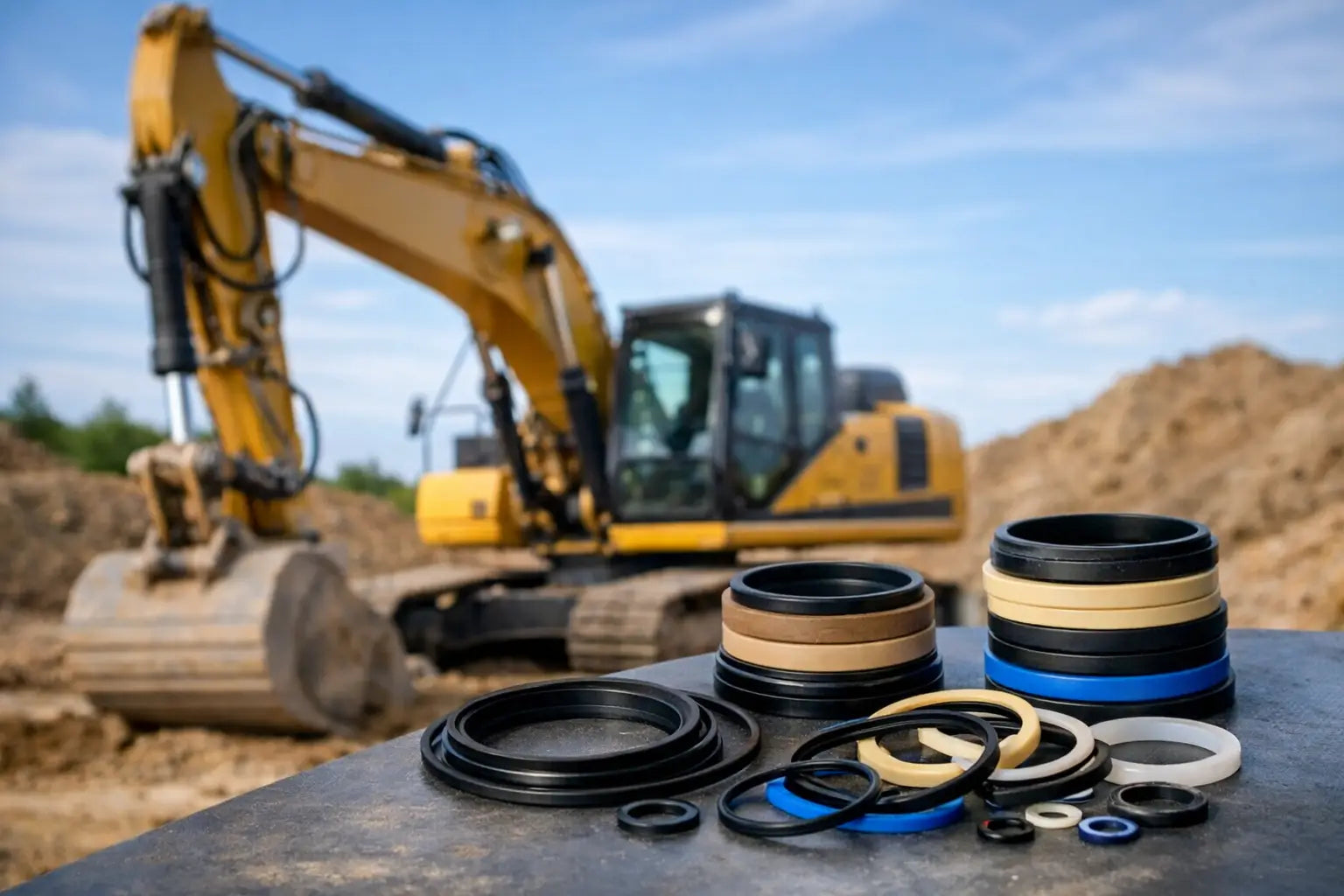
A boom cylinder that starts weeping may still finish the shift. A rod seal that fails under load can put the machine out of work before the next truck arrives. Excavator seal kits are a small part of the repair, but the correct kit determines whether a rebuilt cylinder returns to service cleanly or comes back apart for a second repair.
For repair shops, fleet teams, and contractors, the buying decision is rarely just about finding a seal with the right outside diameter. Cylinder location, machine model, rod size, groove geometry, operating pressure, oil condition, and the original manufacturer’s part number all affect fitment. Getting those details right protects labor time, hydraulic oil, and scheduled machine availability.
Why Excavator Seal Kits Must Match the Cylinder
An excavator uses multiple hydraulic cylinders, and each one has a different working role. Boom, arm, bucket, blade, and track adjuster cylinders may look similar from the outside, but their seal arrangements and dimensions can differ substantially. A boom cylinder handles high loads and long stroke movement. A bucket cylinder often sees shock loads, contamination, and frequent cycling. A travel motor or swing motor application is a separate sealing requirement altogether.
This is why a generic "excavator kit" is not enough information to place an order. A correct listing should identify the equipment brand, machine model, cylinder position, and ideally an OEM reference number or dimensional specification. A BUCKET KIT for one Komatsu model may not fit the boom cylinder on the same machine. Even within a model range, production changes can introduce a different cylinder assembly.
The most reliable starting point is the number stamped on the cylinder, followed by the OEM part number from the parts book. If neither is available, measure the removed components and record the cylinder bore, rod diameter, piston dimensions, seal groove widths, and cross-sections. Photos of the old seal stack can help, but they should support measurements rather than replace them.
The seal profiles inside a typical kit
A cylinder kit is a matched collection of parts designed to control pressure, retain oil, and keep contamination out. Depending on the application, it can include a rod seal, piston seal, wiper seal, buffer seal, O-rings, back-up rings, wear rings, and static seals.
The rod seal keeps hydraulic oil inside as the rod extends and retracts. The wiper removes dirt, sand, and moisture from the rod before contaminants reach the rod seal. Buffer seals handle pressure spikes and reduce stress on the main rod seal. Piston seals separate the pressure sides of the cylinder, while wear rings prevent metal-to-metal contact and keep the piston and rod properly aligned.
When one component is damaged, replacing only that part can appear economical. In practice, a full matched kit is usually the better repair when the cylinder is already disassembled. Worn wear rings can allow side loading that shortens rod-seal life. A hardened wiper can allow contamination into a new seal stack. Reusing aged O-rings also creates an avoidable return-repair risk.
How to Identify the Correct Excavator Seal Kit
Part-number matching is the fastest route to accurate procurement. It reduces the chance of confusing a boom kit with an arm kit or ordering a kit for the wrong serial-number range. For common equipment platforms, search terms should include the machine make, model, cylinder application, and the manufacturer’s seal-kit or cylinder number.
If the original number is unreadable or unavailable, dimensional matching is the next best method. Measure with calibrated tools, not a tape measure. A small difference in rod diameter, groove width, or seal height can prevent proper installation or cause early leakage. Metric and inch-based dimensions also get confused regularly, particularly on older imported equipment and replacement cylinders.
Before ordering, verify these details:
- Machine brand, model, and serial-number range where applicable
- Cylinder location: boom, arm, bucket, blade, steering, tilt, or track adjuster
- Cylinder assembly number and existing seal-kit part number
- Rod diameter, bore diameter, piston size, and seal groove measurements
- Seal profile and material where the application uses a non-standard arrangement
Material Choice Matters in Real Working Conditions
Most excavator hydraulic seal kits use materials selected for mineral hydraulic oils, pressure, heat, abrasion, and movement. Common materials include polyurethane, nitrile rubber, PTFE compounds, fabric-reinforced rubber, and thermoplastic wear materials. Each has a role, and the right choice depends on the cylinder design and operating environment.
Polyurethane is widely used for high-wear rod and piston seals because it resists abrasion and performs well in demanding mobile equipment. Nitrile is common in O-rings and static applications where compatibility with petroleum-based hydraulic oil is required. PTFE-based seals can offer low friction and good performance at higher pressures, but they often require specific installation methods and supporting energizers.
Material selection becomes more critical when machines run in heat, coastal humidity, fine dust, quarry conditions, or continuous-duty work. A low-cost kit that uses unsuitable materials can fail quickly even when the dimensions appear correct. On the other hand, paying for a premium material where the original cylinder design does not require it may not improve service life. The practical target is a kit that matches the manufacturer’s design and the equipment’s real duty cycle.
What Causes Repeat Seal Failure
A new kit will not correct damage elsewhere in the cylinder. If a rebuilt cylinder leaks again shortly after installation, the seal may be the symptom rather than the cause.
Inspect the rod for pitting, scoring, bent sections, chrome damage, and corrosion. A sharp defect can cut a new rod seal within a few cycles. Inspect the barrel for scoring and check the piston and gland for damaged grooves, loose wear rings, or burrs. A contaminated hydraulic system can also introduce abrasive particles that wear seals rapidly.
Installation practices matter just as much. Clean all components before assembly, remove groove debris, use the correct installation tools, and lubricate seals with compatible clean hydraulic oil. Avoid using screwdrivers or sharp picks that nick sealing lips. Directional seals must face the correct pressure side, and PTFE components may need sizing or settling time before the cylinder is returned to service.
It is also worth checking the hydraulic circuit. Pressure relief settings, cylinder side loads, misaligned pins, and damaged bushings can all put a properly rebuilt cylinder under conditions it was not designed to tolerate. If the old seals show a consistent failure pattern, such as extrusion, hardening, lip damage, or uneven wear, use that evidence to inspect the wider system.
Stock Availability Is Part of the Repair Plan
Downtime costs are not limited to the value of a seal kit. A parked excavator can delay operators, transport, site work, rental commitments, and follow-on trades. For urgent repairs, a supplier’s ready-stock position and dispatch speed are operational factors, not just purchasing preferences.
A practical parts source should make it straightforward to search by equipment manufacturer, model, application, OEM number, and seal dimensions. It should also carry related items that commonly arise during the same job, including oil seals, O-rings, bearings, cylinder components, and replacement spare parts. This reduces time spent splitting an urgent order across multiple suppliers.
MXPseal supports this type of procurement with stocked hydraulic seal kits and equipment-specific replacement parts across major excavator platforms. For buyers, the key is still verification: compare the listing details against the cylinder number, machine application, and measurements before dispatch.
Price should be assessed against the full repair cost. The least expensive kit is not automatically the lowest-cost option if it causes a repeat teardown, oil loss, or another day of machine downtime. A correctly matched, dependable kit with clear fitment information is generally the better commercial decision.
When the cylinder is open, take the extra time to document its numbers, dimensions, and seal arrangement. That record turns the next repair from a time-sensitive identification job into a fast, accurate parts order.