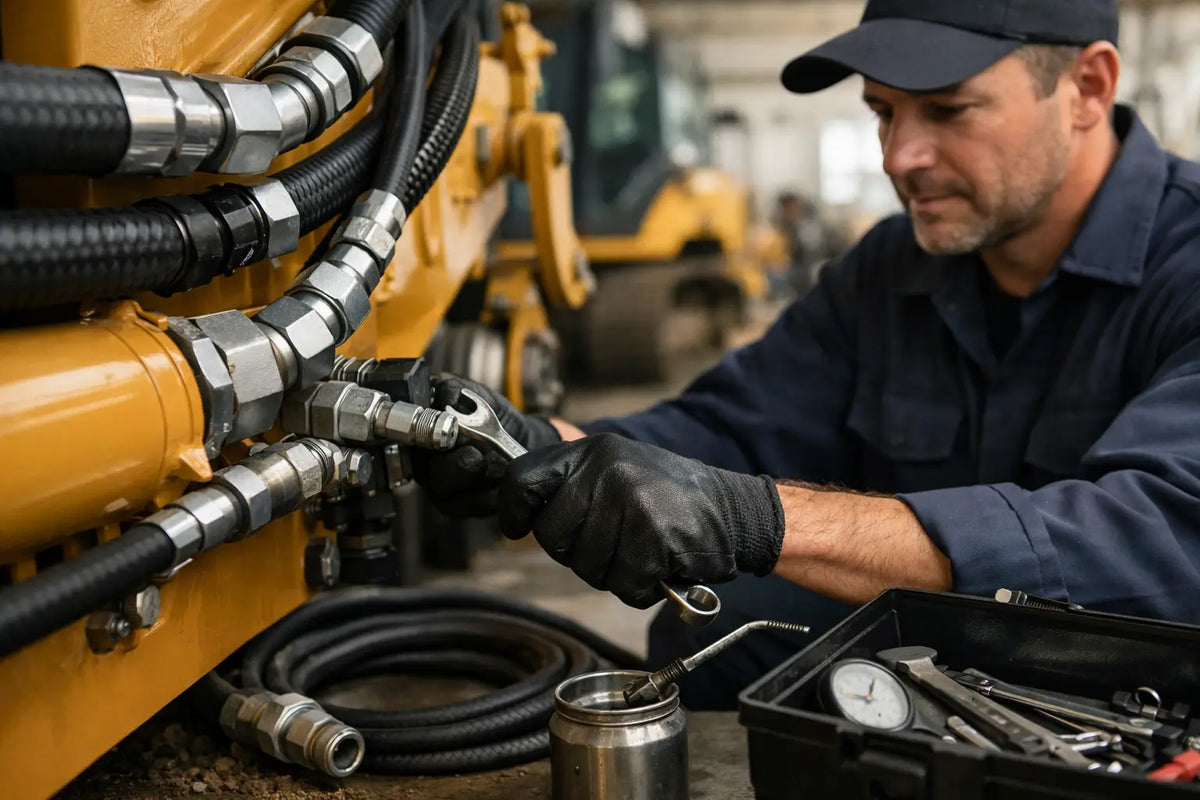
A boom cylinder that drifts overnight, a loader that loses breakout force, or a hydraulic hose connection covered in fresh oil is not a small issue to monitor later. It is a downtime risk already in progress. Effective hydraulic maintenance keeps heavy equipment productive by controlling contamination, catching wear before a failure, and fitting replacement seals and parts that match the cylinder and machine exactly.
For fleet managers, workshop teams, and independent repair technicians, the objective is not simply to replace leaking seals. The objective is to avoid repeat repairs, protect pumps and valves, and return the machine to service with the right parts on hand.
Start Hydraulic Maintenance With Clean Fluid
Most hydraulic failures begin with contamination, not a visibly damaged seal. Dirt, moisture, metal particles, and degraded oil circulate through close-clearance components. Abrasive particles can score cylinder rods and barrels, damage valve spools, and accelerate wear on pump components. Water can corrode internal surfaces and reduce lubricant performance.
Check fluid condition during scheduled service rather than waiting for an alarm or performance complaint. Look for changes in color, odor, foam, cloudiness, or visible debris. Dark oil alone does not always prove the oil is unusable, particularly on older working machines, but burnt odor, milky appearance, or persistent foam requires investigation. Use oil analysis where equipment utilization, repair cost, or fleet size justifies it. A sample can show particle levels, water content, viscosity changes, and wear metals before they become a major component failure.
The fill point matters as much as the fluid specification. Clean around filler caps and breathers before opening the reservoir. Use dedicated, sealed transfer containers and filtered dispensing equipment. Open buckets, reused funnels, and uncleaned jugs introduce the same contamination a filtration program is meant to remove.
Filter replacement intervals should follow the machine manufacturer's schedule, adjusted for operating conditions. Machines in demolition, quarrying, marine work, muddy jobsites, or high-dust environments may need closer monitoring. Replacing a filter too late risks bypass and contamination circulation. Replacing it too early can add cost without solving the root cause. If a filter is loaded unusually fast, inspect for an internal component failure, incorrect fluid, or outside contamination entering the system.
Inspect Cylinders Before They Leak
Hydraulic cylinder maintenance should be based on condition and application. A machine that runs a few hours per week under light loading needs a different inspection routine than an excavator cycling its boom and bucket cylinders all day. Still, a consistent walk-around inspection catches many failures early.
Pay close attention to the rod, gland, and pin-end area. A dry dust film around the wiper is normal in some applications. A wet ring of oil, oil running down the rod, or oil collecting around the gland is not. External leakage can indicate a worn rod seal, damaged wiper, loose gland, scored rod, excessive side loading, or a combination of these conditions.
A seal kit will not correct damaged metal surfaces. Before ordering parts, inspect the rod for pitting, chrome flaking, scoring, dents, and corrosion. Run a clean lint-free cloth carefully along the rod. A raised defect may catch the cloth even when it is difficult to see. Any sharp edge that passes through the rod seal can quickly destroy a new seal during operation.
Check cylinder mounting pins and bushes as well. Excessive play can side-load the rod and gland, reducing seal life even when the installed kit is correct. On a bucket cylinder or boom cylinder, a recurring leak on one side of the machine may point to linkage wear or alignment issues rather than a poor-quality seal.
Know the Difference Between External and Internal Leakage
External leakage is easy to identify because oil escapes from the cylinder or fitting. Internal leakage is less visible but can be equally costly. A cylinder may drift under load, move slowly, lose holding force, or require constant operator correction. In some cases, the fault is a worn piston seal or wear ring. In others, it may be a control valve, relief valve, hose restriction, or pump performance problem.
Test before stripping the cylinder. Compare functions, verify system pressure against specification, and isolate the circuit where practical. A cylinder repair based only on drift symptoms can waste labor and parts if the valve block is bypassing internally. Good hydraulic maintenance uses evidence, not assumptions.
Match Seal Kits by Application, Not Appearance
Many hydraulic seals look similar across equipment brands and cylinder sizes. That does not make them interchangeable. A near-match can fail during installation, leak at operating pressure, or wear quickly because its material, cross-section, or groove fit is wrong.
Verify the machine manufacturer, model, cylinder location, and OEM part number whenever available. For example, a boom kit, arm kit, bucket kit, tilt kit, steering cylinder kit, and lift cylinder kit on the same machine can all require different seal sets. If an OEM number is unavailable, identify the cylinder by bore, rod diameter, seal dimensions, and the individual seal profile.
Confirm whether the kit includes the correct rod seal, buffer seal, wiper, piston seal, wear rings, O-rings, backup rings, and static seals for the exact cylinder design. Material selection also matters. Standard nitrile compounds suit many mineral-oil hydraulic systems, while higher-temperature, chemical, or specialized-fluid applications may require different materials. Pressure spikes, contamination level, rod speed, and surface condition affect what will last.
This is where part-number verification saves money. Ordering by a photograph or a broad machine description creates unnecessary return delays when the repair is urgent. MXPseal supports equipment-specific cylinder kits and dimensional seal matching so buyers can verify fitment before teardown parts become a production delay.
Use Clean Assembly Practices During Cylinder Repair
A well-matched seal kit can still fail early if cylinder assembly is rushed. Clean the bench, components, and tools before disassembly. Keep removed parts in order and inspect every component as it comes apart. Photographing the seal stack and noting seal orientation can prevent errors, especially on complex piston assemblies.
Do not install seals with picks, screwdrivers, or sharp tools that can cut the sealing lip. Use suitable seal installation tools and protect threaded areas, keyways, and sharp rod edges with an installation sleeve or tape approved for the task. Lubricate seals with compatible clean hydraulic fluid or assembly lubricant. Excess lubricant is not a substitute for cleanliness, but a dry installation can tear or roll a seal lip.
Pay close attention to directional seals. A lip seal installed backward may allow pressure bypass or external leakage immediately. Wear rings should be seated correctly and checked for the required clearance. Tight gland threads, loose retainers, damaged threads, and incorrectly torqued fasteners can all create failures that look like a seal problem.
After reassembly, bleed air from the circuit according to the equipment procedure. Cycle the cylinder slowly at low load first, then inspect for leakage and abnormal movement. Recheck fluid level after air has cleared. A hurried return to full load can damage a newly repaired cylinder or hide a remaining issue.
Build Service Intervals Around Operating Reality
Hour-meter schedules are useful, but they are only a starting point. A rental fleet working across multiple operators and jobsites needs documented inspections, fluid records, and failure history. A single owner-operated excavator may rely more heavily on frequent visual checks and operator feedback. The right interval depends on duty cycle, environment, machine age, and the cost of an unplanned stop.
Keep a practical record for each machine: fluid and filter changes, cylinder repairs, seal kit part numbers, rod repairs, recurring leak locations, and findings from oil analysis. This creates a useful pattern over time. If the same lift cylinder receives rod-seal repairs every few months, investigate contamination, rod condition, bushing clearance, and loading practices before ordering another kit.
Stocking common service parts also changes the maintenance outcome. For critical machines, holding verified seal kits, wipers, O-rings, hose fittings, and filters reduces waiting time when inspection finds a problem. The correct inventory level depends on fleet size and equipment mix, but a small set of fast-moving, machine-specific parts can prevent a minor leak from becoming days of lost work.
When to Repair and When to Replace
Cylinder resealing is usually cost-effective when the barrel is sound, the rod can be polished or rechromed within specification, and the mounting points remain serviceable. Replacement becomes more sensible when the barrel is deeply scored, the rod is badly bent or damaged, threads are compromised, or repair costs approach the price of a complete assembly.
There is no universal answer. A rare cylinder on a specialized machine may justify a detailed repair, while a common assembly needed immediately may be better replaced. Consider total downtime, labor, part availability, expected service life, and the risk of repeat failure rather than focusing only on the lowest initial price.
The best time to source the correct kit is when the first inspection identifies wear, not when the machine is parked with a failed cylinder. Keep fluid clean, verify every fitment detail, and treat small leaks as service signals. That approach keeps hydraulic work predictable, protects expensive components, and gives the maintenance team a better chance of keeping the next shift on schedule.