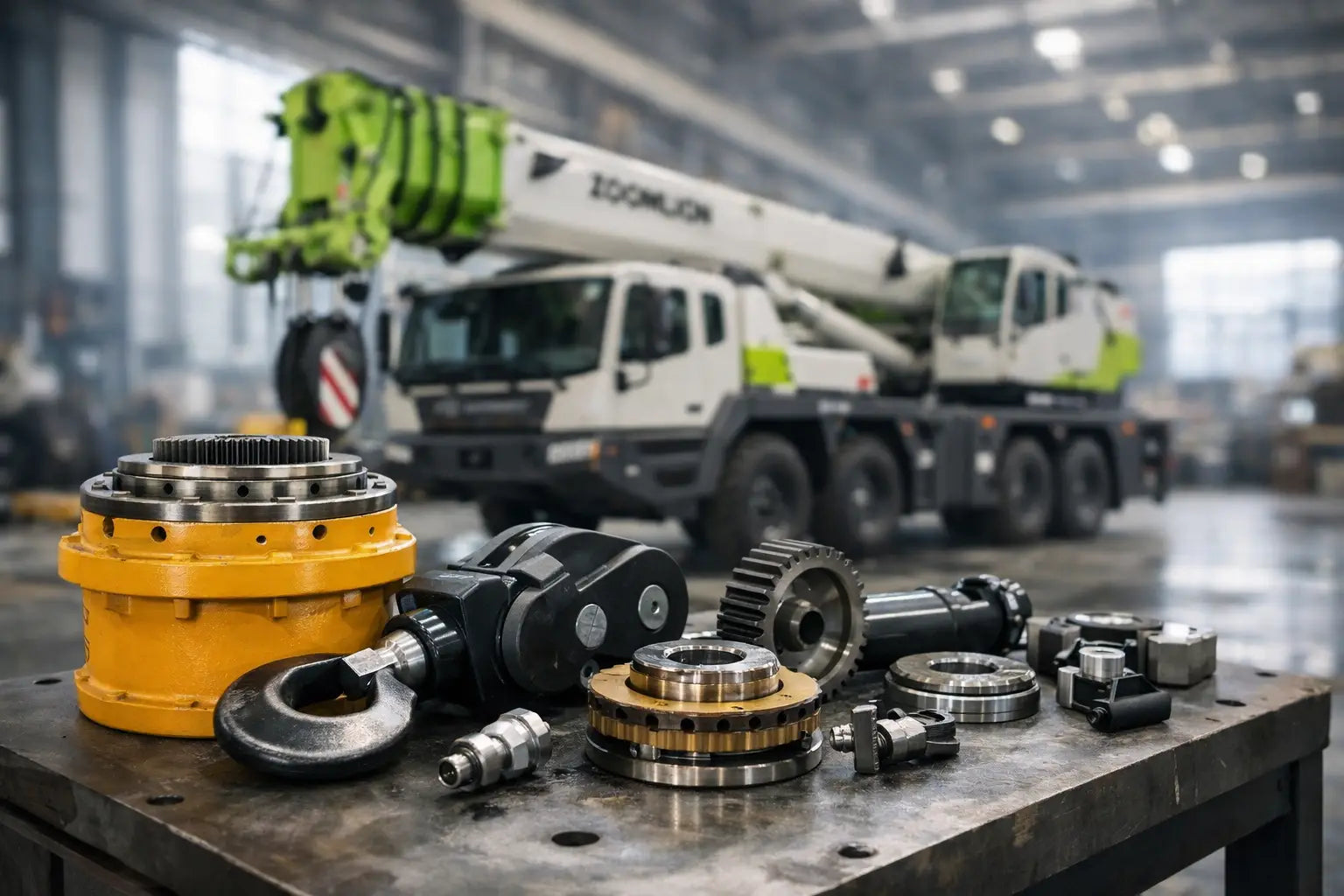
A crane can be parked by a small hydraulic leak, a worn wear pad, or a failed swing-drive seal just as easily as by a major component failure. Ordering Zoomlion crane parts correctly starts with identifying the application, not simply matching the crane brand or a photo of the old part. Model series, production year, cylinder position, and OEM part number all affect fitment.
For fleet maintenance teams, crane repair shops, and equipment dealers, the goal is straightforward: get the right replacement part on the first order, install it without modification, and return the machine to service without creating a second repair. That requires a disciplined approach to part identification, especially where hydraulic seal kits and machine-specific components are involved.
Why Crane Part Matching Requires More Than a Model Number
A model number is an essential starting point, but it is rarely the whole answer. A single Zoomlion crane platform may use different cylinders, seal profiles, or component revisions across production batches. The boom lift cylinder, telescopic cylinder, outrigger cylinder, steering cylinder, and hoist system can each require different parts even when they are installed on the same machine.
The risk is highest with hydraulic repair kits. Two piston seals can look nearly identical yet differ in inside diameter, outside diameter, cross-section, material, or groove requirements. Installing the wrong seal may cause internal bypass, external leakage, high friction, rod scoring, or early failure under load.
Use the OEM part number whenever it is available. If the old packaging, service record, or parts manual is missing, collect the machine serial number, crane model, component name, and clear measurements. A supplier can work much more accurately with "main boom cylinder rod seal" and the cylinder bore and rod dimensions than with "seal for Zoomlion crane."
The Zoomlion Crane Parts Information to Confirm First
Before requesting a quote or placing an order, verify the machine identification plate and record the full model designation. Include serial number and production year where possible. Crane families can have regional configurations or updated hydraulic systems, and serial information helps narrow down the correct revision.
Next, identify the component location. On a hydraulic crane, describe whether the repair is for the boom lift cylinder, telescope cylinder, outrigger jack, steering cylinder, cab tilt cylinder, winch motor, swing motor, hydraulic pump, or another assembly. “Boom kit” alone may not be specific enough when the crane has multiple boom-related cylinders.
For a removed seal or mechanical component, capture all markings. OEM numbers, manufacturer codes, and dimensional markings on oil seals, bearings, wipers, and piston seals are valuable fitment references. Photograph the markings before cleaning the part, since solvent and wear can make them difficult to read later.
For seals, measure with suitable calipers rather than relying on a tape measure. The useful dimensions depend on the seal type, but commonly include rod diameter, cylinder bore, seal outside diameter, groove width, and seal height. Measure the groove as well as the old seal if there is any doubt. A worn or swollen old seal may no longer reflect its original dimension.
Common Replacement Categories for Zoomlion Cranes
Hydraulic cylinder repair is one of the most frequent maintenance requirements. A complete cylinder seal kit may include a rod seal, buffer seal, wiper seal, piston seal, wear rings, O-rings, backup rings, and static sealing elements. The kit contents vary by cylinder design, so a kit should be matched by application or verified dimensions, not ordered solely because it is labeled for a similar crane.
Rod seals and wipers deserve particular attention. The rod seal retains hydraulic oil under pressure, while the wiper excludes dirt, moisture, and abrasive material as the rod retracts. Replacing only the leaking rod seal can be a false economy if the wiper is damaged and the rod operates in dusty lifting environments. Contamination entering through a failed wiper can shorten the life of every sealing element in the gland.
Oil seals are also used in rotating assemblies such as winches, gearboxes, swing drives, axle-related components, and hydraulic motors. Correct shaft size, housing bore, width, lip arrangement, and material matter. A standard-looking oil seal with an unsuitable lip material can fail quickly when exposed to heat, pressure, or incompatible fluid.
Bearings, bushings, wear pads, pins, and related mechanical spare parts are equally important to crane availability. Excessive play at boom sections, outriggers, hooks, or slew-related assemblies affects more than noise and operator comfort. It can alter alignment, accelerate wear, and create inspection concerns. Match these items by exact OEM number or full dimensions, including bore, outside diameter, width, and any flange or lubrication features.
When to Order a Complete Seal Kit
A single replacement seal may be appropriate when damage is isolated, the cylinder has low hours since the last rebuild, and the remaining components are in known good condition. It can reduce cost and return a minor repair to service quickly.
In many field repairs, however, a complete seal kit is the better maintenance decision. If the cylinder has been opened due to leakage, inspect the rod, bore, piston, gland, and wear rings before deciding. A degraded buffer seal, flattened O-ring, or worn guide ring may not be the visible source of the leak, but leaving it in service can require the cylinder to be removed again shortly afterward.
Complete kits are especially practical for boom, outrigger, and telescopic cylinders where removal time, access equipment, and labor cost are significant. The trade-off is that kits must be verified carefully. A low-cost kit without confirmed fitment is not a cost saving if it delays installation or damages the cylinder.
Inspect the Failure Before Fitting New Parts
New Zoomlion crane parts cannot correct a damaged mating surface. Before installing seals, inspect the piston rod for pitting, corrosion, dents, chrome peeling, and longitudinal scoring. Run a fingernail across suspect marks. If the defect can be felt, it can damage a new rod seal and create another leak.
Check the cylinder bore for scoring, corrosion, and contamination. Inspect gland threads, retaining hardware, and wear rings. If the rod has side play or the piston is contacting the bore, investigate guide rings, bushings, and alignment before fitting new seals. Seal failure is often the symptom, not the root cause.
Clean all components thoroughly and keep the work area controlled. Abrasive dust, rag fibers, and metal particles can damage sealing lips during assembly. Use hydraulic fluid compatible with the system to lubricate seals lightly during installation. Avoid sharp tools that can cut a sealing edge or scratch a groove.
Seal orientation matters. A pressure seal installed backward may leak immediately or fail under load. Refer to the removed seal’s orientation only with caution, since a prior repair may have been assembled incorrectly. Confirm the seal profile and pressure side before final assembly.
Buy by Verified Fitment, Not Visual Similarity
Photos are useful for initial identification, but they should not be the final approval method. Many crane seals, bearings, and mechanical components share a similar appearance across different models. The safest purchase decision combines the OEM reference, machine details, component location, and measured dimensions.
For urgent repairs, send the supplier all available information in the first inquiry. Include the crane model, serial number, part number, application, dimensions, and photos of markings. This reduces back-and-forth and gives the parts team a stronger basis for checking stock and fitment. MXPseal supports this practical approach with equipment-specific repair kits and industrial sealing components held for direct replacement needs.
If an exact OEM number cannot be confirmed, be clear about what has been measured and what remains uncertain. A good dimensional match can be the correct route for standard oil seals, O-rings, bearings, and certain hydraulic seals. For model-specific kits or safety-critical assemblies, OEM-number confirmation is usually the lower-risk choice.
Plan Stock Around Your Failure History
For a single crane, it may not be practical to stock every possible spare. For a rental fleet, contractor, or repair shop with multiple Zoomlion units, holding selected high-turn items can prevent costly delays. The best stock list comes from service history rather than guesswork.
Keep verified records for the seal kits, oil seals, wipers, bearings, and other parts used on each crane. Record the OEM number, installed location, date, machine hours, and supplier reference. Over time, this creates a usable maintenance file and reduces the chance of ordering from an incomplete description during an urgent breakdown.
Prioritize parts that are inexpensive, cause immediate downtime when they fail, and have predictable wear patterns. Hydraulic cylinder seal kits, rod seals, wipers, common O-rings, selected oil seals, and frequently replaced wear components are often sensible candidates. Larger assemblies may be better ordered as needed, depending on lead time, cost, and fleet utilization.
A well-documented part record turns the next crane repair into a controlled procurement task rather than a search for a part that only looks right. That is how maintenance teams protect both schedule and budget when the next hydraulic leak or wear-related repair arrives.