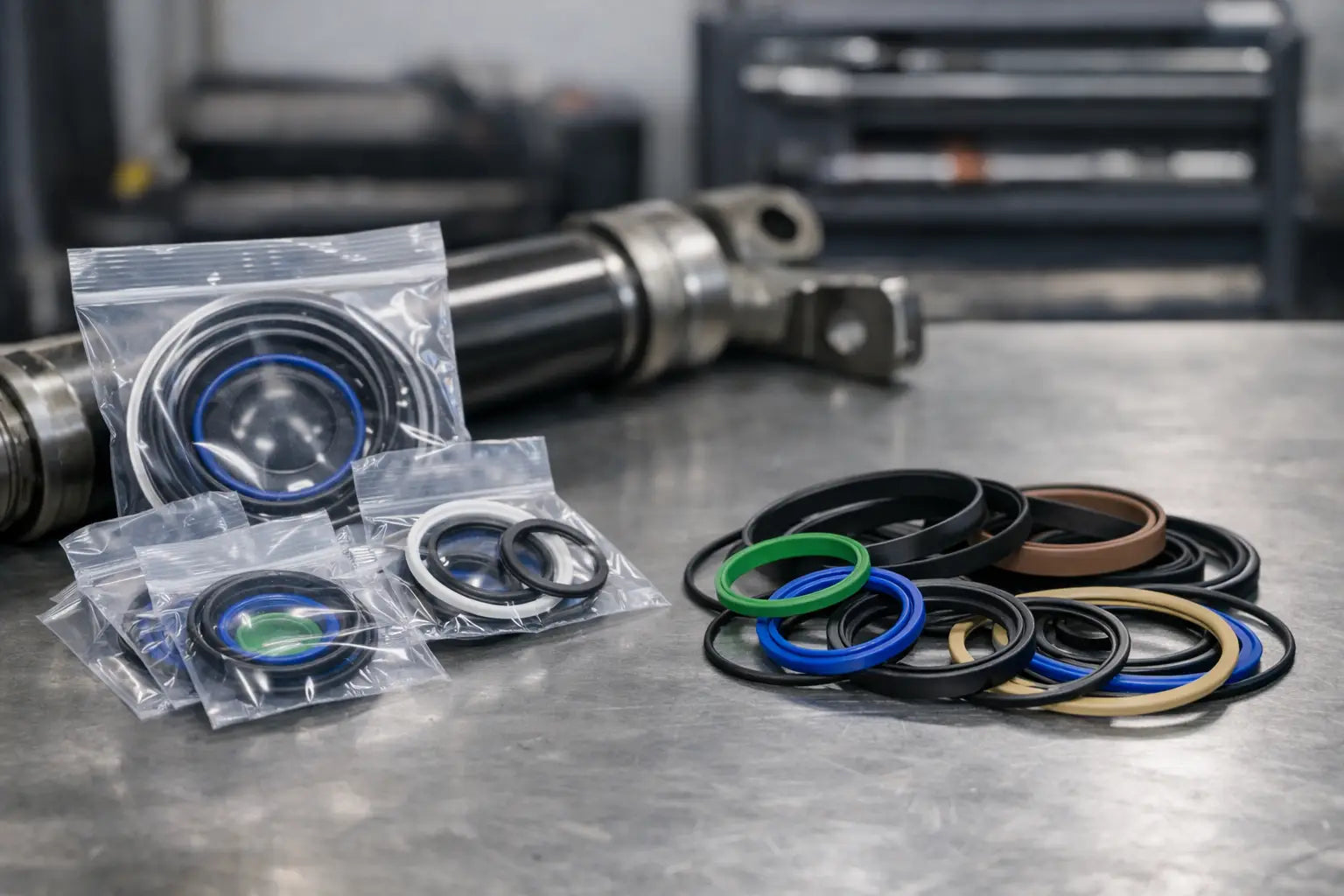
A leaking boom cylinder can stop a machine long before the rest of the hydraulic system is due for service. When the cylinder is already on the bench, the decision between OEM versus aftermarket seal kits is not theoretical. It affects fitment, repair time, repeat-work risk, and the total cost of putting the machine back to work.
For repair shops, fleet teams, and equipment owners, the right answer is rarely "always OEM" or "always aftermarket." The correct kit depends on the machine, cylinder condition, operating environment, part identification, and how quickly the repair must be completed.
OEM versus aftermarket seal kits: the real difference
An OEM seal kit is supplied by, or sold under, the equipment manufacturer’s parts system. It is normally identified by an OEM part number and specified for a particular machine model, cylinder location, or component assembly. A boom cylinder kit, arm cylinder kit, bucket cylinder kit, steering cylinder kit, or travel motor seal kit may each carry a different OEM reference even when several seals appear similar.
An aftermarket seal kit is produced by an independent seal manufacturer or replacement-parts supplier. Quality aftermarket kits may be built to the same dimensional requirements and use materials suited to the same pressure, temperature, and fluid conditions as the original kit. They can also be offered under a cross-reference part number, cylinder dimensions, or machine application.
The label alone does not establish performance. An OEM kit can be the safest route when the part number is confirmed and available. A properly specified aftermarket kit can be an equally practical choice when it matches the cylinder exactly and comes from a dependable source. The problem begins when a buyer treats any kit described for a machine brand as interchangeable with the required application.
Start with fitment, not price
A seal kit is a system of matched components. Piston seals, rod seals, wipers, O-rings, backup rings, wear rings, and static seals must work with the cylinder’s groove geometry, rod diameter, bore, pressure range, and hydraulic oil. A kit that is close in size can still fail early, drag excessively, or allow external leakage.
Before choosing OEM or aftermarket, verify the component being repaired. Confirm the equipment make and model, serial number range where applicable, cylinder position, and existing part number. For a hydraulic cylinder, also check the rod diameter, cylinder bore, seal groove dimensions, and whether the assembly has been repaired or modified previously.
This matters on machines that have several cylinder variants. A Caterpillar, Komatsu, Hitachi, Hyundai, SANY, LiuGong, XCMG, or Zoomlion model may use different cylinder part numbers across production runs. Even a boom cylinder and arm cylinder on the same excavator can use similar-looking seals with different profiles or cross sections.
If the OEM part number is available, use it as the starting point. If it is not, dimensional matching and seal-profile identification are the next best route. Do not order from machine model alone when a cylinder location, serial break, or component code is missing.
What a complete kit should address
A complete cylinder seal kit should match the exact assembly and include the components required for a proper reseal. Check the kit contents against the parts removed from the cylinder and the service requirements. In some cases, the correct repair also needs a replacement rod seal, wiper, piston seal, wear ring, or backup ring that is not included in a basic service pack.
For high-wear or damaged cylinders, seals are only part of the job. Inspect the rod for scoring, pitting, or chrome damage. Check the bore, gland, piston, threads, and retaining hardware. Installing an excellent kit into a cylinder with a damaged rod surface can create a repeat leak quickly.
When OEM seal kits make sense
OEM kits are often preferred when machine history, warranty requirements, or internal procurement policy requires genuine equipment parts. They are also a strong option for newer machines, highly specialized assemblies, and applications where the OEM has introduced a revised seal design.
For example, an OEM may change a seal material, wiper arrangement, or backup-ring configuration after field experience. Ordering by the latest genuine part number can ensure the repair receives that update. This can matter for cylinders operating under heavy side loads, severe vibration, high temperatures, or continuous duty cycles.
OEM is also sensible when the repair team has a confirmed OEM number and the kit is immediately available. A known, in-stock kit with verified fitment has real operational value. There is little benefit in saving on a lower-priced alternative if it delays the repair, requires return shipping, or sends technicians back into the cylinder a week later.
Still, genuine equipment packaging does not eliminate the need for verification. Confirm that the OEM number applies to the correct serial range and cylinder location. A correct brand name with an incorrect application is still an incorrect part.
Where quality aftermarket kits deliver value
Aftermarket seal kits are widely used by cylinder repair shops, independent mechanics, rental fleets, and contractors because they can offer strong value and faster access across a broad range of equipment. The best aftermarket options are not generic assortments. They are application-specific or dimensionally verified kits built with appropriate seal profiles and materials.
The material selection matters as much as the profile. Polyurethane is commonly used for wear resistance in dynamic sealing applications. Nitrile compounds are widely used with standard mineral hydraulic oils. PTFE-based seals can suit certain low-friction or high-performance designs. Backup rings help prevent extrusion under pressure, while wipers protect the rod seal from dirt, water, and abrasive contamination.
A quality aftermarket kit can be the better commercial choice when the OEM kit has a long lead time, is discontinued, or carries a price that does not match the machine’s remaining service life. This is common with older excavators, loaders, forklifts, cranes, and agricultural equipment that still have productive operating hours but no longer justify premium dealer-only parts pricing.
The key word is quality. Cheap, poorly specified kits create false savings. Inconsistent hardness, incorrect cross sections, inferior wipers, and incomplete contents can turn a one-day repair into avoidable downtime. Purchase from a supplier that can identify the kit by part number, application, or dimensions and can provide clear fitment information before dispatch.
Compare the total repair cost
The purchase price of a seal kit is only one line on the repair order. The more useful comparison includes labor, downtime, freight, machine utilization, and the likelihood of rework.
A low-cost kit may be the right choice if it is correctly specified, available from stock, and suitable for the machine’s duty cycle. An OEM kit may be cheaper overall if it prevents uncertainty on a critical, high-value machine or avoids a long diagnostic process. For an urgent job, local inventory and fast dispatch can matter more than the difference between two kit prices.
Consider the consequences of failure. A minor seep on an older attachment cylinder is different from a rod seal failure on a crane outrigger, a production excavator, or a forklift operating in a busy warehouse. The higher the safety, access, and downtime cost, the more discipline should go into fitment verification and component inspection.
A practical buying process for seal kits
Use a repeatable process rather than relying on a visual match. Start with the OEM kit number, cylinder number, or machine serial information. Confirm the cylinder position and compare available kit details with the removed seals. Where no part number is available, measure the rod, bore, grooves, and seal cross sections accurately.
Then assess the machine’s working conditions. A machine used in dry, abrasive demolition work needs dependable wiping and contamination control. A cylinder exposed to high heat or unusual fluids may need a specific compound. Equipment with frequent pressure spikes may require the correct backup-ring arrangement and piston seal design.
Finally, buy according to the repair’s priority. If the machine must return to work immediately, choose a verified kit that is in stock and ready to ship. If the cylinder is part of a planned rebuild, compare genuine and quality aftermarket options against expected life, duty cycle, and budget. Keep the kit reference and cylinder details in the maintenance record so the next repair is faster.
MXPseal supports this process with machine-specific kits, standard seal profiles, and part-number-based identification across heavy equipment applications. The useful question is not whether a kit is OEM or aftermarket in isolation. It is whether the kit is correct for the cylinder, available when needed, and built for the job it will do.
When the machine is waiting, do not let an uncertain seal kit become the next source of downtime. Verify the application before ordering, inspect the cylinder before assembly, and keep the confirmed kit number with the service record for the next shift, the next rebuild, and the next urgent callout.