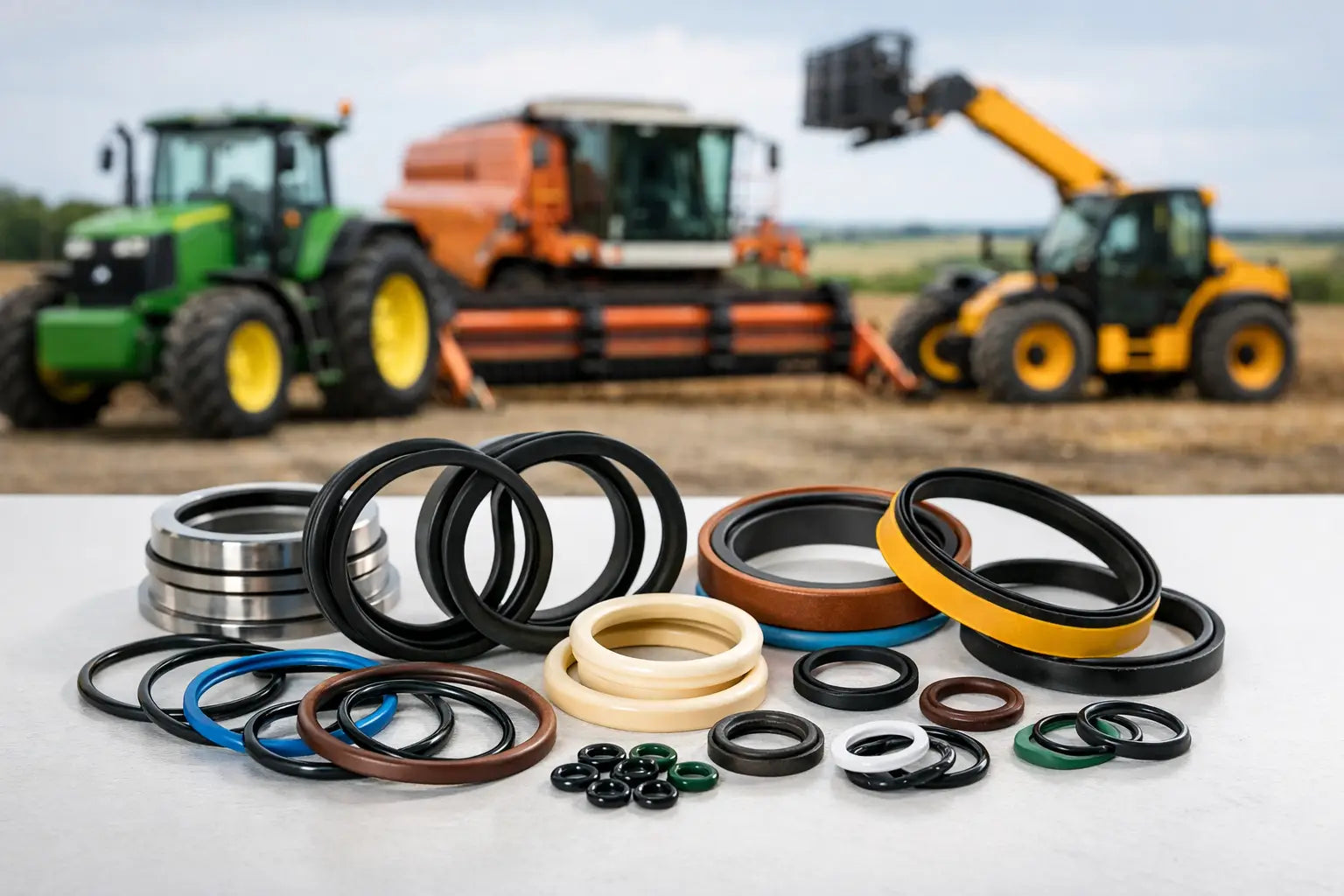
A loader bucket drifting down between jobs, a steering cylinder sweating oil, or a combine ram losing pressure is not a minor parts issue. It can stop fieldwork when labor, weather, and transport are already fixed. Agricultural machinery seal kits provide the wear components needed to rebuild a hydraulic cylinder correctly, but only when the kit matches the exact cylinder and operating conditions.
Why Exact Agricultural Machinery Seal Kits Matter
Hydraulic cylinders on tractors, telehandlers, loaders, harvesters, sprayers, and attachments may look similar from the outside. Their internal seal arrangements often are not. A boom, lift, tilt, steering, bucket, or stabilizer cylinder can use different rod diameters, bore sizes, gland designs, piston configurations, and seal profiles even on the same machine model.
A kit that is close is not a kit that fits. An incorrect rod seal can leak immediately. The wrong piston seal may cause internal bypass and weak cylinder performance. A mismatched wiper can allow dust, chaff, mud, and abrasive debris to enter the gland, shortening the life of the rod, seals, and cylinder barrel.
For maintenance teams, correct fitment protects more than the repair cost. It protects machine availability during planting, feeding, harvesting, and loading work. Ordering a verified kit first is normally cheaper than reopening a cylinder because a seal profile or dimension was assumed.
Start With the Cylinder, Not the Machine Name
Machine brand and model are useful search references, but they should not be the only basis for purchase. Manufacturers can use different cylinder suppliers during production runs, and previous repairs may have replaced the original cylinder. The cylinder part number is the strongest starting point whenever it is available.
Confirm the machine manufacturer, model, and serial-number range, then identify the cylinder location. Terms such as LIFT KIT, BUCKET KIT, BOOM KIT, STEERING KIT, and TILT KIT are practical identifiers because they separate cylinders that may have different internal components. Record any number stamped on the cylinder body, gland, or piston rod, along with the OEM part number from the parts book.
If no part number is readable, measure the cylinder after disassembly. The most useful dimensions are the rod diameter, cylinder bore, piston diameter, gland dimensions, and each seal groove. Do not measure a worn seal and treat that reading as the required size. Measure the clean metal groove and confirm the seal cross section and profile.
Photos of the removed seals can support identification, especially for stepped seals, U-cups, compact piston seals, and unusual wipers. They cannot replace dimensions. A seal can look right in a photo while differing by a small but critical measurement.
Know What a Typical Kit Contains
Agricultural cylinder seal kits are assembled for a specific repair application. Depending on the cylinder design, a kit may include a rod seal, wiper seal, piston seal, wear rings, O-rings, backup rings, buffer seal, static seals, and gland packing.
The rod seal retains hydraulic oil as the rod extends and retracts. The wiper removes external contamination from the rod before it reaches the gland. Piston seals divide pressure chambers inside the cylinder, while wear rings prevent metal-to-metal contact and help keep the piston centered. O-rings and backup rings seal static locations and prevent extrusion under pressure.
Not every cylinder needs every component. A compact agricultural steering cylinder may have a simpler arrangement than a high-load loader lift cylinder. This is why generic "assorted seal" sets are rarely suitable for professional repairs. They can be useful for emergency static-seal work, but they do not replace an application-specific kit.
Match Material to the Work Environment
Seal material affects service life, particularly on equipment exposed to temperature swings, fertilizer, water, dust, and continuous hydraulic cycling. Nitrile rubber, commonly called NBR, is widely used with standard mineral hydraulic oils and suits many general agricultural applications. Polyurethane is often selected for high abrasion resistance in rod and piston sealing positions. PTFE-based seals can provide low friction and reliable performance in demanding hydraulic designs.
Material choice depends on the hydraulic fluid, pressure, temperature, speed, and contamination level. A machine operating in dry, dusty grain handling conditions may benefit from a strong wiper and abrasion-resistant rod sealing arrangement. Equipment exposed to aggressive chemicals or nonstandard fluids may require a different elastomer specification.
There is a trade-off. Higher-performance materials are not automatically the best answer if they do not match the cylinder design or fluid. The correct seal profile, dimensions, and material must work together. When the application is uncertain, use the existing seal specification, cylinder manufacturer data, or a verified machine-specific kit rather than selecting material by appearance.
Inspect the Cylinder Before Installing New Seals
A new kit will not correct damaged hardware. Before assembly, inspect the piston rod for scoring, pitting, chrome flaking, bends, and rust. Any defect in the rod travel area can cut a new rod seal quickly. Check the cylinder barrel for scoring and examine the gland, piston, threads, and retaining components for damage.
Clean all parts thoroughly and remove old seal fragments from grooves. A small piece of hardened O-ring or debris behind a backup ring can prevent proper seating. Check wear rings and guide surfaces because excessive clearance lets the rod or piston move sideways, increasing seal wear.
During installation, avoid sharp edges, exposed threads, and dry assembly. Use compatible hydraulic fluid or approved assembly lubricant, fit seals in the correct direction, and use installation tools that do not nick the sealing lip. Stretching a seal beyond its intended limit or forcing it into a groove can create a failure before the cylinder returns to service.
After reassembly, cycle the cylinder slowly at low load where possible. Check for external leaks, smooth movement, rod drift, and abnormal pressure behavior. Recheck fittings and cylinder mounting points after the machine has returned to normal work.
A Practical Ordering Checklist
Before placing an order for a machine-specific kit, verify these details:
- Equipment make, model, and serial-number range where available
- Cylinder application, such as lift, bucket, steering, boom, or tilt
- OEM cylinder number or equipment part number
- Rod, bore, piston, and seal-groove dimensions if the number is unavailable
- Seal profile, quantity, and material requirements for the hydraulic fluid
Stock Availability Matters During Seasonal Repairs
For agricultural operators and repair shops, lead time is part of the specification. A seal kit is often ordered because a machine is already down or showing clear signs of failure. Waiting weeks for a small internal component can leave a tractor, loader, or harvesting attachment idle at the worst possible time.
Look for a supplier that carries ready stock across hydraulic seals, cylinder kits, oil seals, bearings, and related machine spare parts. One source can simplify procurement when a repair inspection identifies more than a leaking gland. MXPseal supports this type of parts sourcing with equipment-specific kits and dimensional seal options for maintenance buyers who need accurate fitment and fast dispatch.
Price still matters, but a low initial price is not a saving if the kit does not fit, lacks key components, or fails early. Compare the complete repair requirement: correct contents, material quality, application match, stock status, dispatch timing, and return process. These are the details that determine whether the machine returns to work on schedule.
When a cylinder first begins to weep or drift, record its numbers and dimensions before the repair becomes urgent. That small step turns the next seal-kit order from a guess into a controlled maintenance decision.