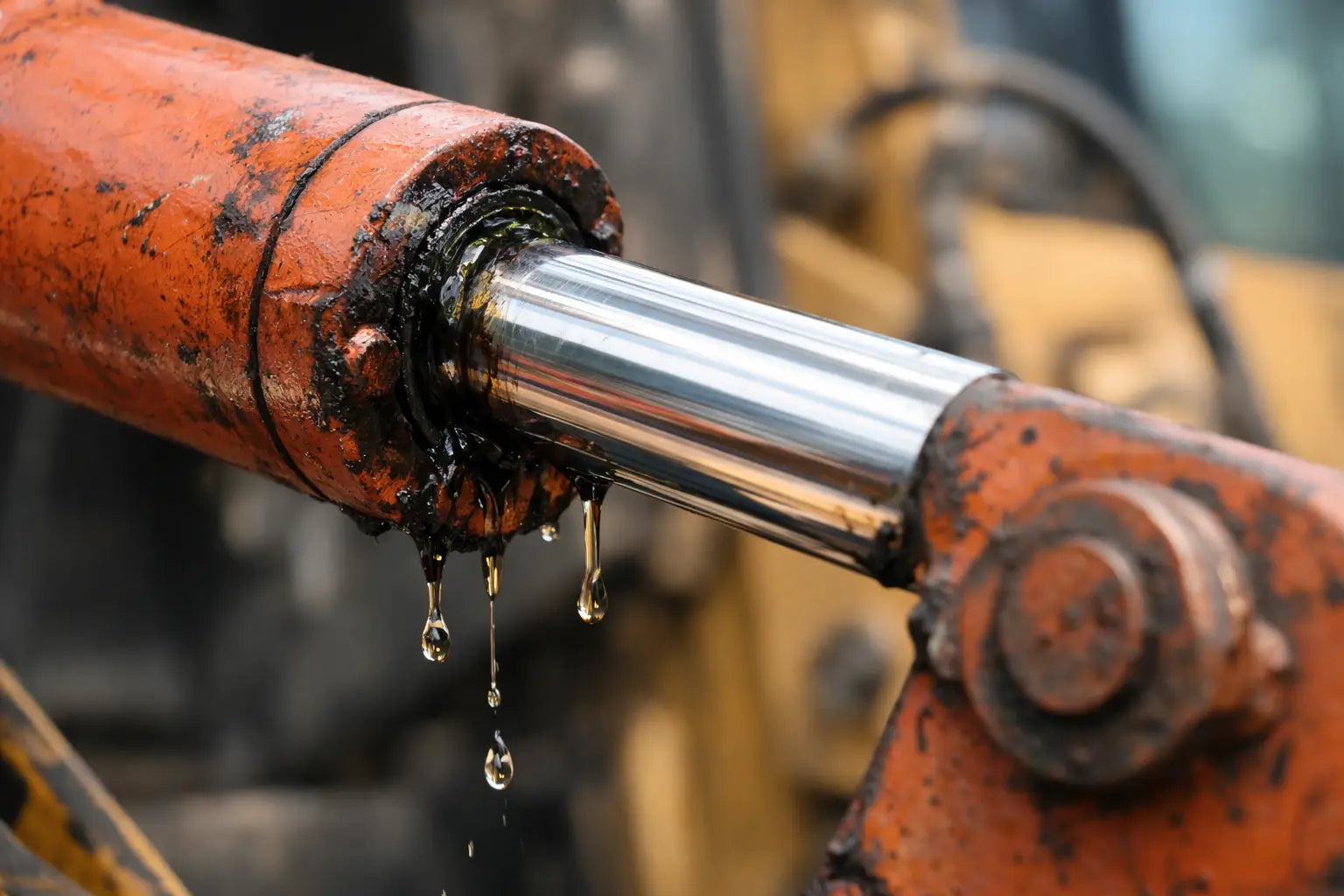
A boom cylinder leaving oil down the rod is not always a simple seal failure. When operators ask what causes hydraulic cylinder leaks, the correct answer often involves the seal kit, rod surface, gland condition, oil cleanliness, and the way the cylinder is being used. Replacing one damaged seal without finding the underlying fault can put the machine back into service for only a few shifts before the leak returns.
For excavators, loaders, forklifts, cranes, and agricultural equipment, the leak location provides the first useful clue. External leakage at the rod, port, or gland differs from internal bypass across the piston. Diagnose the failure before ordering parts. It reduces repeat labor, protects the cylinder barrel and rod, and helps ensure the replacement kit matches the actual repair requirement.
What Causes Hydraulic Cylinder Leaks at the Rod?
The rod end is the most visible leak point on a hydraulic cylinder. Hydraulic oil collecting on the rod, gland, or surrounding machine structure usually points to a damaged rod seal, but the seal itself may not be the root cause.
Worn, hardened, or incorrectly fitted rod seals
Rod seals are exposed to pressure, rod movement, temperature cycles, and contamination every time the cylinder strokes. Over time, the sealing lip can wear, harden, crack, or lose its ability to maintain contact with the rod. Age-related hardening is common on machines that sit outdoors, operate in high heat, or use fluid that is incompatible with the seal material.
Installation errors can cause an immediate or early failure. A seal installed backward, twisted in the gland, cut on a sharp edge, or stretched beyond its limit may leak from the first operation. The exact seal profile matters. A U-cup, buffer seal, and rod seal may look similar at a glance, but they are designed for different positions and pressure conditions.
Always verify the cylinder application, OEM part number, rod diameter, bore diameter, seal cross section, and gland dimensions. A kit listed for a bucket cylinder is not automatically correct for a boom or arm cylinder on the same machine model.
Scored, pitted, bent, or corroded piston rods
A new rod seal cannot compensate for a damaged rod. Chrome pitting, rust, weld spatter, impact marks, and deep scoring act like cutting tools against the sealing lip. Each stroke pulls oil past the seal and can carry dirt into the gland.
Bent rods create a different problem. They side-load the rod seal and guide rings, especially near the end of stroke. This often shows up as uneven seal wear, a polished contact area on one side of the rod, or repeated leakage after seal replacement. Check rod straightness and inspect the chrome surface under good light before fitting a new kit.
Minor surface marks may be repairable depending on their depth and location. Deep corrosion, flaking chrome, or a damaged rod in the sealing travel area generally requires rod repair or replacement. Installing a premium seal kit over a poor rod surface is usually false economy.
Failed wipers allow dirt into the gland
The wiper seal is the first defense against dust, sand, slurry, and moisture. Its job is to clean the rod as it retracts. A split, loose, or missing wiper allows abrasive contamination to enter the gland and reach the rod seal, wear rings, and hydraulic oil.
This is a frequent issue on earthmoving equipment working in demolition, quarry, mining, or wet ground conditions. Wipers are inexpensive compared with a complete cylinder rebuild, so they should be replaced whenever the gland is opened. If the machine works in abrasive conditions, inspect the wiper regularly rather than waiting for a visible oil leak.
Other Hydraulic Cylinder Leak Sources
Not every leak comes from the rod end. A careful inspection prevents the wrong repair kit from being ordered.
Leaking port seals, fittings, and hoses
Oil around a cylinder port can come from an O-ring, bonded seal, adapter, hose end, cracked fitting, or damaged port thread. Pressure pulses and hose movement can loosen fittings over time. A fitting tightened beyond specification may distort the sealing washer, damage the port, or crack an adapter.
Clean the area first, operate the system at a safe distance, and identify where fresh oil begins to appear. Never use a hand to search for a pressurized hydraulic leak. High-pressure fluid injection is a serious injury risk. Use cardboard or another suitable detection method and follow the machine manufacturer's safety procedure.
Gland, barrel, and head damage
A cylinder gland with damaged threads, a cracked weld, or a distorted seal groove cannot retain seals correctly. Similarly, barrel scoring or ovality can let piston seals bypass internally or wear prematurely. These failures are more likely after an overload, side impact, improper disassembly, or a previous repair using incorrect tools.
Cylinder heads and retaining systems also deserve attention. Loose gland retainers, damaged snap ring grooves, or worn locking components can allow the gland to move. That movement changes seal compression and can create an external leak even when the rod seal is new.
Piston seal bypass and internal leakage
Internal leakage does not always leave oil on the outside of the cylinder. Instead, pressurized oil bypasses worn piston seals from one side of the piston to the other. The cylinder may drift under load, lose holding power, move slowly, or generate excess heat in the hydraulic system.
For example, an excavator boom that slowly drops with the control valve in neutral may have cylinder piston-seal bypass, valve leakage, or both. Testing is needed before condemning the cylinder. A cylinder isolation test, pressure test, and inspection of the control valve circuit can separate these faults.
Piston seal failure can result from normal wear, contaminated oil, barrel damage, excessive pressure, or a seal material that does not suit the fluid and operating temperature. Wear rings are equally important because they keep the piston centered in the barrel. When they wear out, metal contact and side loading can quickly damage the piston seal.
Contamination, Heat, and Pressure Shorten Seal Life
Hydraulic seals operate within a system, not independently. Oil condition and machine operating conditions have a direct effect on leak frequency.
Contaminated fluid is one of the most common causes of premature cylinder seal wear. Fine dirt, metal particles, and water damage sealing lips and increase abrasion between moving surfaces. Contamination can enter through failed breathers, damaged wipers, poor storage practices, dirty refill equipment, or a cylinder opened in an unclean work area.
High oil temperature hardens elastomers and reduces lubricant film strength. Low oil temperature can make certain seal materials stiff during startup. The right material depends on the machine, hydraulic fluid, duty cycle, ambient conditions, and seal design. Nitrile, polyurethane, PTFE, and fabric-reinforced seals each have different performance characteristics. There is no universal best choice for every cylinder.
Overpressure and shock loading can extrude seals into clearance gaps or damage buffer seals. This may be caused by incorrect relief-valve settings, blocked lines, aggressive operation, or an attachment that overloads the cylinder. If a cylinder repeatedly blows seals after proper rebuilding, check system pressure and load conditions instead of repeatedly changing kits.
A Practical Inspection Before Ordering a Seal Kit
Start by cleaning the cylinder exterior and identifying the exact leak point. Inspect the rod through its full travel for scratches, pitting, and bending. Check the wiper condition, gland movement, hose connections, ports, and nearby valve block for oil tracking that may be mistaken for a cylinder leak.
If the cylinder is removed for repair, inspect the rod, gland bore, seal grooves, piston, barrel, and wear rings. Record the machine make, model, cylinder location, OEM cylinder number, and any seal markings. Measurements should be taken with suitable calipers, not estimated from an old damaged seal.
A complete repair should normally consider the rod seal, buffer seal where fitted, wiper, piston seals, wear rings, static O-rings, and backup rings. Reusing old static seals or worn guide rings to save a small amount can lead to another teardown. For high-use equipment, keeping the correct boom kit, arm kit, bucket kit, tilt kit, or steering-cylinder kit on hand can reduce downtime when a leak develops.
MXPseal supports this type of repair with machine-specific and dimensional seal kit options for heavy equipment, helping maintenance teams match parts by application, OEM reference, or measured size when the cylinder has been opened.
Preventing Repeat Cylinder Leaks
Prevention comes down to protecting the rod, maintaining clean oil, and using the correct components. Keep rods clean during storage and avoid parking equipment with exposed rods in corrosive or wet conditions when possible. Replace damaged wipers early, maintain filters and breathers, and investigate overheating or abnormal pressure before it damages multiple cylinders.
During assembly, use clean hydraulic oil for lubrication, protect seals from sharp threads and ports with installation sleeves or tape where appropriate, and follow the correct orientation for each seal. Tighten gland retainers and fittings to the required specification. A careful rebuild takes longer than forcing parts into place, but it is faster than removing the cylinder twice.
The best next step after finding a leak is not simply to order the nearest-looking seal. Confirm the failure point, inspect the mating surfaces, and match the kit to the exact cylinder. That approach keeps the machine working, controls repair cost, and gives the replacement seals a fair operating life.