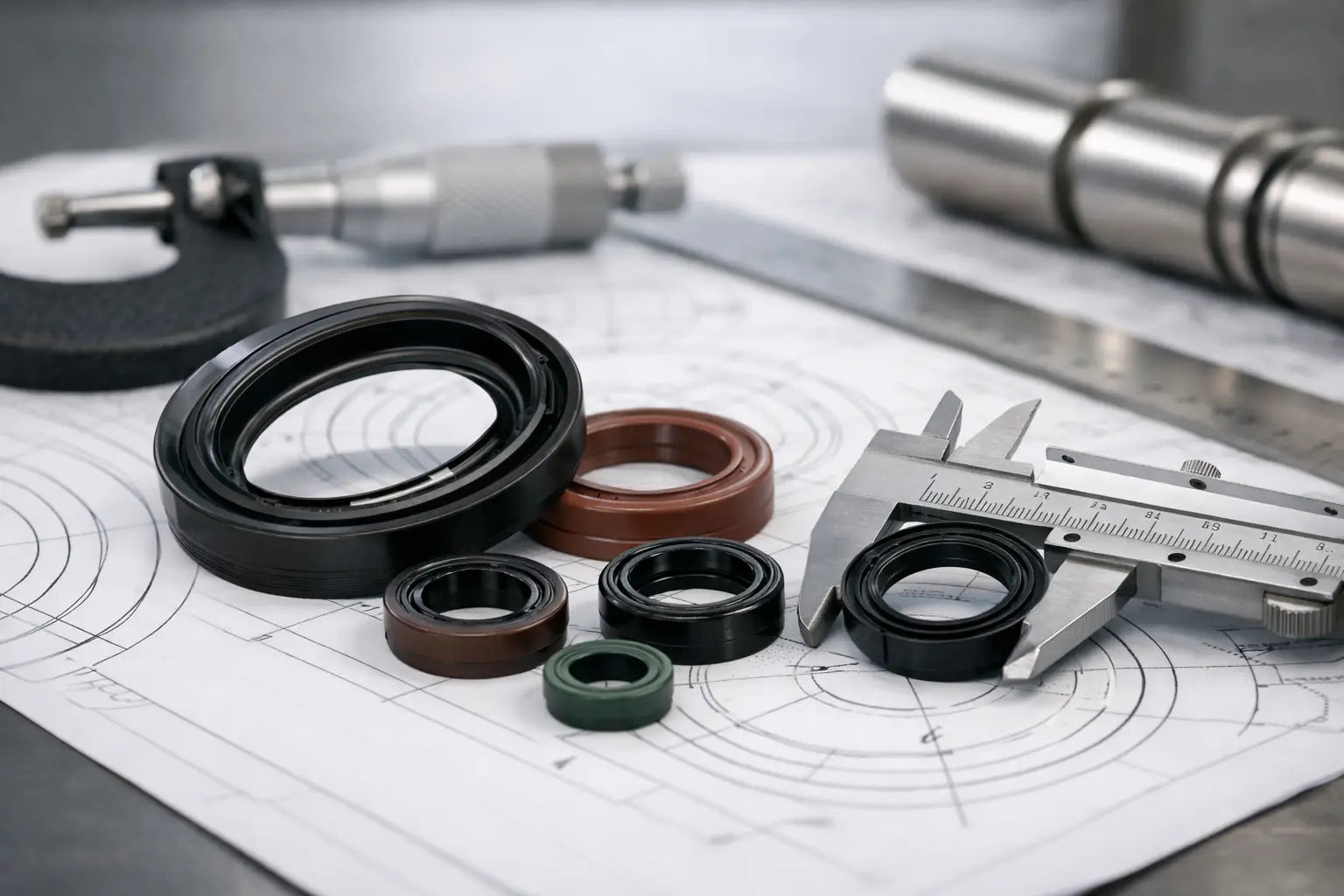
A rotary shaft seal can look correct on the bench and still fail within hours if one dimension is wrong. A seal that is too loose in the housing can spin or leak around the outside diameter. One that is too tight on the shaft can run hot, wear the lip early, and leave a machine out of service. This rotary shaft seal size chart gives maintenance teams a practical way to identify the nominal size before ordering.
For most oil seals, the size is written as three numbers: shaft diameter x housing bore diameter x seal width. For example, a 50 x 72 x 10 seal fits a nominal 50 mm shaft, a 72 mm housing bore, and has a 10 mm overall width. Those three numbers are the starting point, not the complete fitment decision.
Rotary Shaft Seal Size Chart: Reading the Three Dimensions
The standard format is always ID x OD x W, although catalogs may label the dimensions as d x D x B.
| Marking | What it represents | Where to measure |
|---|---|---|
| ID or d | Nominal shaft diameter | The smooth running surface under the sealing lip |
| OD or D | Housing bore diameter | The inside diameter of the seal bore |
| W, B, or H | Seal width | The axial depth of the installed seal |
A common mistake is measuring the old seal's rubber lip opening and treating that measurement as the seal ID. Do not do this. The lip is manufactured slightly smaller than the shaft so it maintains interference and contact pressure. Measure the shaft itself, then match that result to the seal's stated nominal ID.
The OD is equally critical. A metal-cased or rubber-covered seal needs the right press fit in the housing. If corrosion, fretting, or previous removal has damaged the bore, a standard-size replacement may not hold securely even when the nominal dimensions match. Inspect the housing before placing the order.
Width matters because it controls how the seal sits against shoulders, retaining plates, bearings, spacers, and internal oil passages. A wider seal is not automatically an upgrade. If it blocks an oil return path or contacts another component, it creates a new failure point.
Common Metric Rotary Shaft Seal Sizes
The table below covers frequently encountered metric dimensions for industrial gearboxes, pumps, travel drives, wheel hubs, final drives, hydraulic attachments, and general rotating equipment. It is a reference for identifying the size format, not a substitute for checking the equipment parts book or existing seal marking.
| Shaft ID (mm) | Housing OD (mm) | Width (mm) | Typical notation |
|---:|---:|---:|---|
| 20 | 35 | 7 | 20 x 35 x 7 |
| 25 | 40 | 7 | 25 x 40 x 7 |
| 30 | 42 | 7 | 30 x 42 x 7 |
| 30 | 47 | 7 | 30 x 47 x 7 |
| 35 | 52 | 7 | 35 x 52 x 7 |
| 40 | 55 | 7 | 40 x 55 x 7 |
| 40 | 62 | 7 | 40 x 62 x 7 |
| 45 | 62 | 7 | 45 x 62 x 7 |
| 50 | 72 | 10 | 50 x 72 x 10 |
| 55 | 72 | 8 | 55 x 72 x 8 |
| 60 | 80 | 10 | 60 x 80 x 10 |
| 65 | 85 | 10 | 65 x 85 x 10 |
| 70 | 90 | 10 | 70 x 90 x 10 |
| 75 | 95 | 10 | 75 x 95 x 10 |
| 80 | 100 | 10 | 80 x 100 x 10 |
| 90 | 110 | 10 | 90 x 110 x 10 |
| 100 | 120 | 12 | 100 x 120 x 12 |
Many sizes are available in more than one width. A 40 x 62 x 7 and a 40 x 62 x 10 share the same shaft and housing dimensions but are not interchangeable unless the assembly has clearance for the additional width. Always check the installed depth and any shoulder location.
Metric and Inch Sizes Are Not Close Enough
Do not convert a measured inch dimension to metric and assume the nearest result will work. A 1.500-inch shaft is 38.10 mm, not 38 mm. That 0.10 mm difference can be enough to alter lip load and service life. The same issue applies to housing bores and widths.
If the equipment uses inch-series seals, measure in inches with appropriate calipers or identify the OEM number. If the equipment was built to metric specifications, stay in millimeters. Heavy equipment may contain both standards depending on the component manufacturer, repair history, and replacement parts used over time.
Size Alone Does Not Identify the Correct Seal
Two rotary shaft seals can share the same 50 x 72 x 10 dimensions and have different lip arrangements, casing styles, spring configurations, and material ratings. Selecting only by size is risky where pressure, contamination, temperature, or shaft speed is high.
A basic single-lip seal is suited to many clean, oil-lubricated applications. A double-lip design adds an auxiliary dust lip to help exclude dirt, water, and abrasive contamination. This is often the better choice for wheel-end, agricultural, construction, and outdoor equipment, but the auxiliary lip must be installed in the correct direction and may add friction.
Common profile differences include rubber-covered outer diameters, exposed metal cases, fully enclosed metal cases, and seals with internal or external dust lips. A rubber OD can be more forgiving in a slightly imperfect bore. A metal OD can provide a firm location in a clean, accurately machined housing. Neither is automatically better - the housing condition and original seal design decide the practical choice.
Material also affects fitment decisions. Nitrile is common for mineral oils and general industrial service. Fluoroelastomer is often specified where heat, synthetic lubricants, fuel exposure, or demanding duty cycles are present. Changing material without checking fluid compatibility can lead to a seal that swells, hardens, or loses lip tension.
How to Measure a Rotary Shaft Seal Correctly
Start by cleaning the shaft and bore. Dirt, dried oil, paint, and burrs can easily distort a caliper reading. Use a vernier or digital caliper for the seal width and housing bore where access permits. A micrometer is preferred for the shaft running surface, particularly on larger shafts or when wear is suspected.
Measure the shaft in several positions around its circumference and along the lip track. If readings vary, the shaft may be worn, out of round, or grooved. Installing a new seal on a damaged track often produces an immediate leak, even with the correct size and profile. Depending on the application, move the lip to an unworn track, fit a repair sleeve, or replace the shaft component.
Measure the housing bore at more than one point as well. An oval bore, a cracked housing, or an enlarged bore can prevent reliable retention. Check the old seal for signs that it has been spinning in the housing. Polished casing surfaces, rubber debris around the OD, and a loose fit are useful clues.
Finally, record the complete marking from the old seal before disposal. Brand codes, profile codes, rotation arrows, material markings, and part numbers can identify details that dimensions cannot. On machine-specific assemblies, the OEM part number and model serial range remain the safest way to confirm fitment.
Ordering for Heavy Equipment Repairs
For a final drive, axle, gearbox, pump, or motor repair, provide the machine make and model, component location, OEM number if available, and the full seal dimensions. A description such as “oil seal for excavator” is too broad for dependable matching. “Travel motor output seal, 80 x 100 x 10, double lip” gives a parts team a usable starting point.
Also state what failed and where the seal is installed. A seal at a dusty wheel hub has different contamination exposure than one inside a hydraulic pump. That information helps confirm whether the original profile should be retained or whether a suitable equivalent is needed.
MXPseal supports this process with SKU-level dimensional references, equipment-specific replacement parts, and ready-stock sealing inventory for urgent maintenance work. When matching any replacement, prioritize the exact OEM number or verified dimensions and profile over visual similarity.
Before pressing in the new seal, remove burrs, lubricate the lip with the correct fluid, protect the lip from splines and keyways, and install it square to the bore. A correct entry on a rotary shaft seal size chart gets the order right. Careful inspection and installation are what keep the repair dry and the machine working.