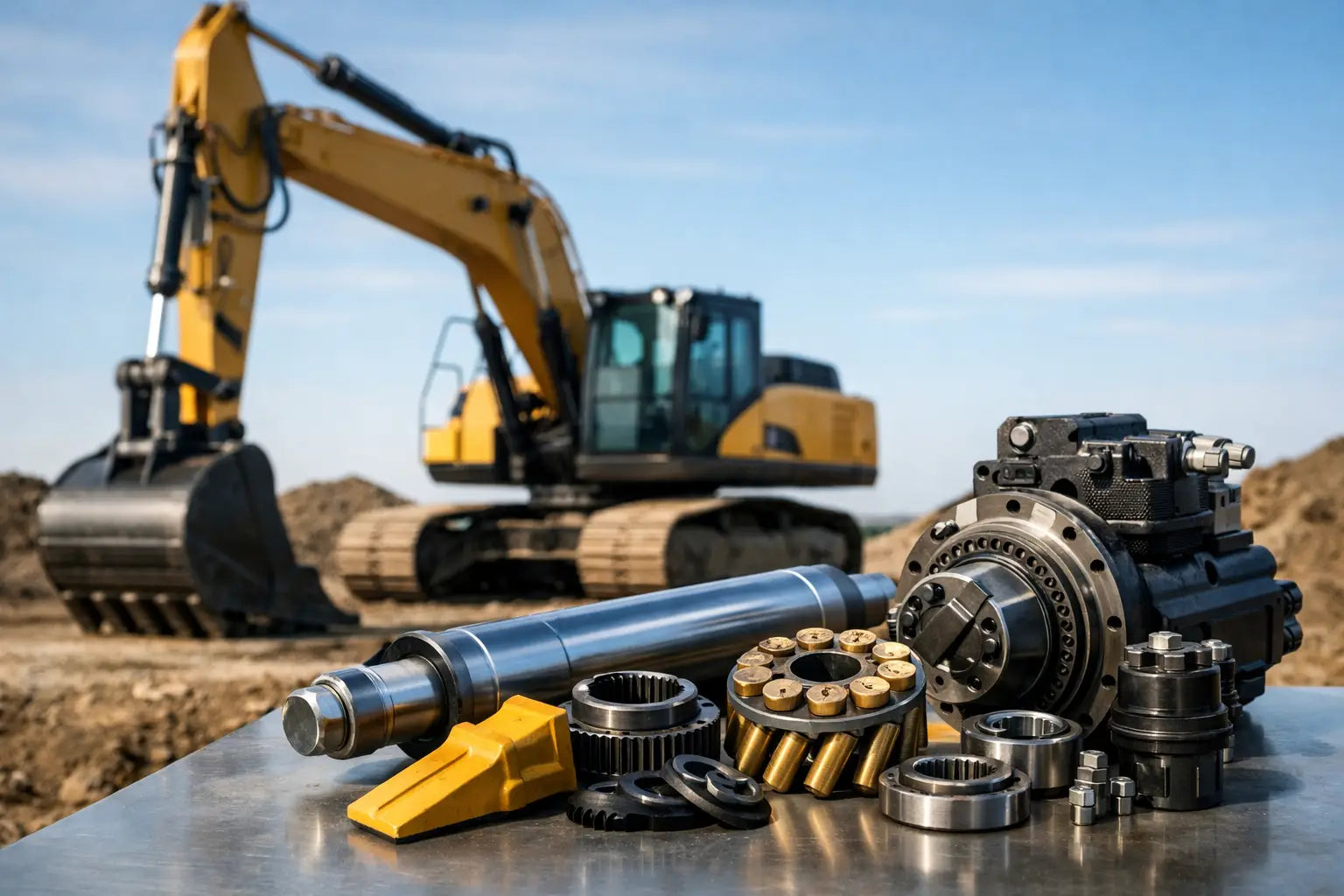
A boom cylinder leaking on a SANY excavator is not a minor parts request when the machine is scheduled for a pour, trench, or loading shift. The right SANY excavator parts need to arrive with the correct fitment, not merely a similar-looking seal or a model name that appears close enough. A wrong kit can leave the cylinder on the bench, consume technician time, and extend downtime by days.
For repair shops, fleet teams, and contractors, accurate sourcing starts with identifying the failed component and confirming the machine details behind it. That means working from OEM part numbers, cylinder application, dimensions, and serial-range information whenever available.
Start With the Component, Not Just the Machine Model
A machine model is a useful starting point, but it is rarely enough to order a critical replacement part. SANY excavators can have production changes, hydraulic component variations, and cylinder assemblies that differ by serial number or market specification. An excavator identified as an SY215, for example, may still require more verification before a boom, arm, or bucket cylinder seal kit is selected.
The most reliable request identifies both the equipment and the failed assembly. For hydraulic repairs, specify whether the kit is for the BOOM CYLINDER, ARM CYLINDER, BUCKET CYLINDER, blade cylinder, or another function. If the old seal kit package, parts book, or cylinder tag provides an OEM number, use it. That number is the fastest route to a like-for-like match.
When an OEM number is unavailable, dimensions become the working reference. A repair shop should measure the rod diameter, bore diameter, piston dimensions, seal groove width, and relevant cross sections before ordering. Photos of the cylinder label, removed seals, and machine identification plate can also prevent a mismatch, particularly when the original seals have worn beyond easy profile recognition.
The SANY Excavator Parts That Drive Urgent Repairs
Not every wear item has the same downtime risk. Hydraulic sealing components are frequently the priority because oil leaks affect machine availability, safety, and jobsite cleanliness. A cylinder seal failure may begin as visible rod oil, but continued operation can damage the rod surface, contaminate surrounding components, and reduce cylinder performance.
Common service requirements include complete cylinder seal kits, piston seals, rod seals, wipers, buffer seals, O-rings, backup rings, and wear rings. Depending on the repair scope, buyers may also need rod oil seals, floating seals, travel motor seals, swing motor seals, pump repair seals, or mechanical items such as bearings and bushings.
A complete kit is usually the practical choice when rebuilding a cylinder. It reduces the risk of reusing aged secondary seals or missing a low-cost internal component that causes an early return to service. However, an individual seal is appropriate when the repair diagnosis is clear and the remaining parts are confirmed serviceable. The decision depends on cylinder condition, labor cost, machine age, and whether the unit is already stripped down.
For high-hour excavators, inspect the rod, piston, gland, and barrel before fitting new seals. A quality kit cannot compensate for a scored rod, pitted chrome, distorted gland, damaged seal grooves, or contaminated hydraulic oil. If the rod surface damages a new rod seal on installation, the repair will fail regardless of the seal brand selected.
Verify These Details Before Placing an Order
Parts procurement moves faster when the required information is gathered before the machine is opened or the order is submitted. For SANY hydraulic-cylinder parts, confirm these four points:
- Machine model and serial number, including any applicable production range.
- Cylinder location and function, such as boom, arm, bucket, or blade.
- OEM part number from the parts manual, removed kit, or cylinder assembly where available.
- Critical measurements and clear photos when a part-number match cannot be made.
This verification process also matters for mechanical SANY excavator parts. Bearings, oil seals, bushings, pins, filters, electrical sensors, and undercarriage components may have model-specific or serial-specific variations. A supplier should be able to work from the exact reference rather than guessing from a broad equipment category.
Choose Seal Materials for the Working Conditions
Part fitment comes first, but material selection determines how the repair performs after installation. Hydraulic seals are designed around pressure, temperature, fluid type, speed, and contamination exposure. A standard nitrile-based sealing arrangement may suit general mineral-oil hydraulic service, while polyurethane, PTFE, fabric-reinforced, or high-temperature elastomer options can be better suited to specific applications.
The correct choice depends on the cylinder design and operating environment. A bucket cylinder working abrasive material may need strong wiper performance to keep contamination out. A machine operating continuously in heat may require materials with better temperature resistance. A cylinder with rod damage or side loading may need inspection and component correction rather than a harder seal material used as a temporary workaround.
Brand selection should be based on the repair requirement, fitment confidence, and available specification. OEM replacement parts offer direct reference matching where required. Recognized industrial seal brands can provide dependable alternatives when the seal profile, dimensions, and operating parameters are confirmed. The lowest-priced option is not always the lowest-cost repair if it creates a repeat failure, but buying the most expensive kit without verifying compatibility is no better.
Avoid the Most Common Ordering Errors
The first error is ordering by appearance. Black U-cups, wipers, and O-rings can look interchangeable even when their lip geometry, material hardness, and dimensions differ. The second is confusing a cylinder assembly number with an individual seal-kit number. Both references are useful, but they should not be treated as the same part number without cross-checking.
Another common issue is ordering a partial kit when the job requires a full rebuild set. Check the kit contents against the cylinder exploded view or the removed parts before approving the order. If a kit includes the primary pressure seals but excludes a needed wear ring, static seal, or backup ring, the technician needs to know before the cylinder is dismantled.
Finally, do not delay ordering until every component has been cleaned and disassembled if the machine is already down. Record the machine and cylinder information early, then verify removed seals as the rebuild progresses. This allows the supplier to check stock and dispatch timing while the inspection work is underway.
Build a Faster Parts Process for Your Fleet
For fleets with multiple SANY units, the most effective approach is to keep a repair history by machine, serial number, cylinder location, and installed part number. Once a verified BOOM KIT or BUCKET KIT has been used successfully, record the reference, dimensions, and service date. Future repairs become a repeatable purchasing task instead of a fresh identification exercise.
It also makes sense to hold selected fast-moving kits in maintenance inventory when equipment utilization is high and job schedules are tight. Stock only the references supported by your actual fleet data. Carrying generic seals with no confirmed application may appear economical, but it often shifts the cost to diagnosis time and emergency freight.
MXPseal supports this process with ready-stock sealing products, machine-specific repair kits, and part-number-focused sourcing for heavy-equipment maintenance. For urgent work, inventory availability and accurate application checking matter as much as the catalog price.
A good SANY excavator repair starts before the wrench reaches the cylinder. Capture the exact machine and component references, inspect the hardware that caused the failure, and order parts that match the application. That discipline keeps a routine seal replacement from becoming another unplanned downtime event.